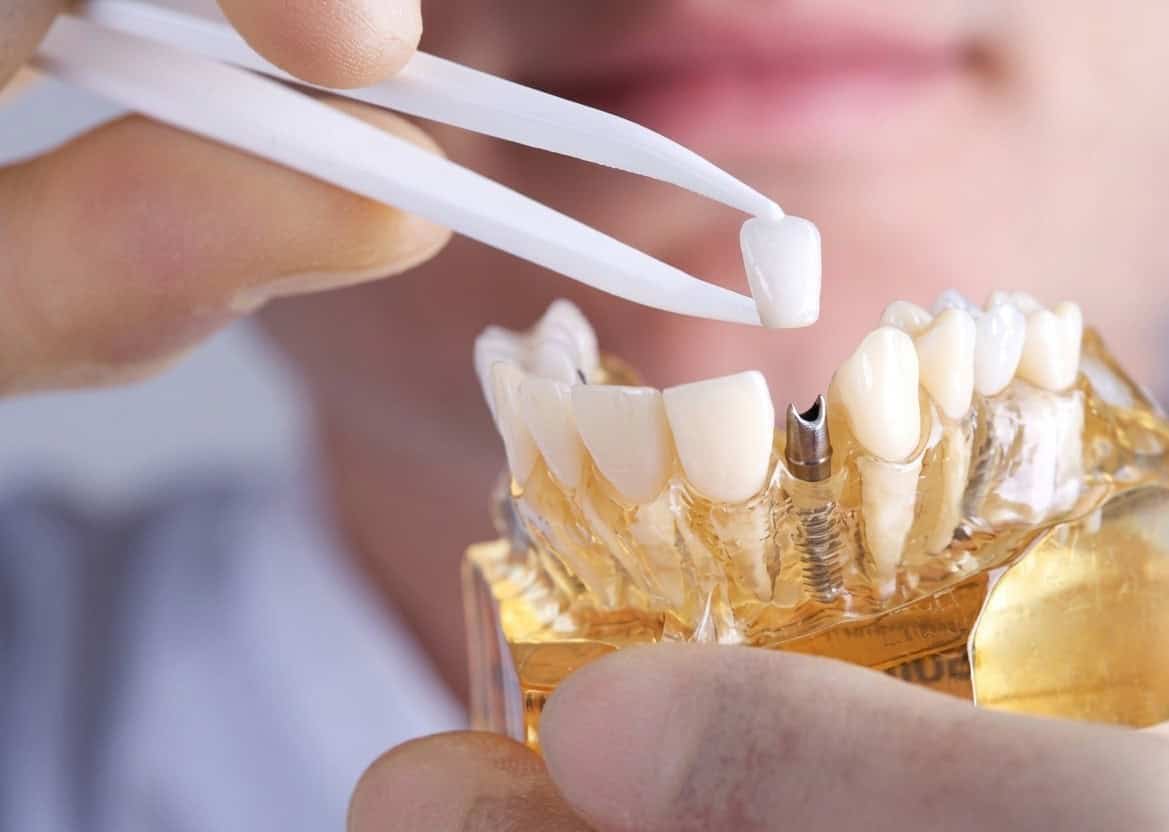
Conscious sedation for dental implants is a method that helps the patient feel calm and relaxed during the procedure, without completely losing consciousness. The patient continues to breathe independently, can communicate with the dental team, and also receives local anesthesia to numb the area where the implants are placed.

What is conscious sedation in dentistry?
Conscious sedation uses sedative medications to reduce anxiety, fear, and tension during dental treatment.
The patient is not put under general anesthesia. They remain conscious, retain their protective reflexes, and are able to respond to the dentist’s instructions throughout the procedure.
Many patients feel drowsy and perceive the treatment as shorter than it actually is. After intravenous sedation, some may remember very little of the procedure, even though they were not completely asleep.
Why is sedation used during dental implant placement?
Dental implants are generally placed under local anesthesia, which numbs the area and prevents pain during the procedure. Sedation may be added when the patient has significant anxiety, fear of the dentist, or difficulty remaining calm during a longer procedure.
It may also be useful when multiple implants are being placed, a bone graft is being performed, or the procedure involves several surgical stages in the same session.
Sedation does not replace local anesthesia. Its purpose is to reduce anxiety and make the experience more comfortable, while local anesthesia numbs the area being treated.
How is intravenous sedation administered for dental implants?
Intravenous sedation is administered through a thin cannula, usually inserted into a vein in the hand or arm. The medication is given gradually so that the level of sedation can be adjusted to the patient’s response.
During the procedure, heart rate and blood oxygen levels are monitored. The patient continues to communicate with the dentist and is able to follow simple instructions.
Once the patient is relaxed, local anesthesia is applied in the mouth. The implantologist then proceeds with placing the implant or carrying out the other planned procedure.
Will I be asleep during implant placement?
No. During conscious sedation, the patient is not completely asleep and does not lose consciousness as happens with general anesthesia.
However, the feeling of drowsiness can be intense. Time may seem to pass quickly, and the patient may not remember every stage of the treatment.
If, during the procedure, the dentist asks the patient to open their mouth, breathe deeply, or slightly change position, the patient must be able to respond.

Which patients may be suitable candidates?
Conscious sedation may be considered for patients who are afraid of dental implants, experience significant anxiety during appointments, have a pronounced gag reflex, or have difficulty tolerating long procedures.
It may also be considered for those who have had a difficult dental experience in the past or postpone treatment because of fear.
Suitability does not depend only on the level of anxiety. The dental team must assess the patient’s medical history, current medications, allergies, physical condition, and the complexity of the planned treatment.
Who requires closer assessment?
Patients with significant breathing problems, uncontrolled medical conditions, medication allergies, or a history of sedation-related complications must inform the dental team before treatment.
Pregnancy, the use of certain medications, and regular alcohol consumption can also affect sedation planning.
Patients should not stop taking their medications on their own. Any changes must be made only in accordance with the instructions of the dentist or the physician managing their health condition.
How should you prepare for sedation?
Before the procedure, the clinic provides personalized instructions regarding food, drinks, and medications. These instructions may vary depending on the sedation method and the patient’s health condition.
It is necessary to inform the clinic about all medications and supplements being taken, as well as any allergies and existing medical conditions. The patient should also report any recent episodes of fever, cough, cold, or breathing difficulties before the appointment.
For intravenous sedation, the patient is generally required to be accompanied by a responsible adult who can help them return home and stay with them during the initial recovery period.
What happens after a dental implant procedure performed under sedation?
At the end of the procedure, the patient remains under observation until the team considers it safe for them to leave the clinic. The stay at the clinic may be slightly longer than for a procedure performed with local anesthesia alone.
The patient must not drive, operate dangerous machinery, consume alcohol, or make important decisions immediately after sedation. They must follow exactly the restriction period indicated by the clinic.
After implant placement, sensitivity, swelling, or mild bruising may occur. These effects are related to the surgical procedure and not necessarily to the sedation.
Is conscious sedation safe?
Conscious sedation is considered a safe method when the patient is properly assessed, the dosage is tailored individually, and the procedure is carried out by qualified professionals in a setting equipped for monitoring.
Professional standards require an assessment of the patient’s medical history, the obtaining of informed consent, and patient monitoring during treatment. The American Dental Association has specific guidelines for the safe use of sedation and anesthesia by dentists.
No medical procedure is completely risk-free. For this reason, before giving consent, the patient must receive information about the benefits, the alternatives, and the possible risks.

Conscious sedation or general anesthesia?
During conscious sedation, the patient continues to breathe independently, remains conscious, and can communicate. With general anesthesia, by contrast, the patient is completely unconscious and requires a different level of monitoring and medical support.
For many patients who are afraid of dental implants, the combination of conscious sedation and local anesthesia may be enough to undergo treatment without resorting to general anesthesia.
The choice does not depend solely on the patient’s preference. It must take into account the patient’s health conditions, level of anxiety, the type of procedure, and the assessment of the medical team.
Sedation for dental implants at Hygeia Dent
At Hygeia Dent, every implant treatment begins with an evaluation of the teeth, gums, jawbone, and the patient’s medical history.
When the patient experiences anxiety or fear about the procedure, the most suitable option can be discussed to make the treatment calmer and more controlled.
The final treatment plan is established after the consultation, examinations, and safety assessment. The goal is to help the patient understand every stage of treatment and feel supported before, during, and after implant placement.
Frequently asked questions
Can I talk during conscious sedation?
Yes. The patient can respond and communicate with the dental team, although they may feel drowsy and speak more slowly.
Can sedation be used for tooth extraction before dental implants?
Yes. When the treatment plan includes tooth extraction and implant placement, sedation may be used throughout the entire appointment if it is considered appropriate.
Can I travel by plane immediately after sedation?
Travel should be planned according to the type of procedure, the duration of the sedation, and the doctor’s instructions. For international patients, it is safer not to schedule departure immediately after the procedure.
Is it possible to carry out multiple dental treatments in the same appointment?
In selected cases, sedation can make it easier to perform multiple procedures during a longer appointment. However, safety and treatment complexity take priority over the goal of completing as many procedures as possible in a single session.