Yes, you can fly after receiving dental implants in Albania, once your dentist has confirmed that your recovery is progressing well and you are ready to travel. The timing of your return home depends on the procedure: a single implant requires different planning than multiple implants, a bone graft, or a sinus lift. By planning your treatment and flight together, you can enjoy a more relaxed stay and return home with clear instructions.
For many patients living abroad, the first question after deciding to get implants is a practical one: “How many days do I need to stay in Albania?” It is an important question, because the trip must allow enough time for the consultation, procedure, rest, and check-up before departure.
At Hygeia Dent, treatment takes place in a modern private hospital, where patients have access to hospital care 24 hours a day, 7 days a week. This setting provides additional support during your stay, especially for those travelling from abroad who wish to have medical assistance nearby.
How Long Should You Wait Before Flying?
There is no single timeframe that applies to every patient. Your dentist will determine the timing based on the number of implants, the condition of the tissues, any associated procedures, and how you feel after the procedure.
General travel guidance after dental surgery often recommends waiting a few days; some suggest an approximate timeframe of 2–5 days. However, this timeframe does not constitute automatic clearance to fly after implant placement. More extensive procedures and procedures involving the maxillary sinus may require a longer wait. The final decision must be made on an individual basis.
For this reason, it is best to discuss your dates with the dental team before booking your return ticket. Scheduling your flight with sufficient time for recovery allows you to rest, attend your check-up, and travel without rushing.
What affects your return home date?
The number of implants and the extent of the procedure
Placement of a single implant and full-arch rehabilitation have different post-treatment requirements. If extractions or other procedures are also performed during the same appointment, the length of your stay may change.
Preliminary information helps with planning, but the final assessment is made after your consultation. Therefore, consider the initial travel plan as a guideline that may be adjusted according to clinical findings.
Bone grafting and sinus lift
In some cases, bone grafting is necessary to provide the support required for the implant. When there is insufficient bone in the back of the upper jaw, a sinus lift, also known as maxillary sinus augmentation, may be recommended.
This procedure requires special attention when planning your flight because it involves an area that is sensitive to pressure changes. If you are advised to undergo a sinus lift, ask for specific travel instructions and do not rely on the recovery timeframe expected for a straightforward implant procedure.
General health and anaesthesia
Tell your dentist about any chronic conditions, allergies, and all medications you are taking. This information helps tailor the procedure and follow-up care.
If treatment is performed under sedation, you will need time to recover and someone to accompany you, in accordance with the team’s instructions. Transportation and post-procedure support should be arranged before the day of treatment.
Can flying damage the implant?
For a newly placed implant, the main factors to assess are the condition of the treated area and whether you are fit to travel. In practical terms, it is important to ensure that bleeding is under control, discomfort is manageable, and you are able to eat and care for your mouth during the journey.
Pressure changes require special attention when the maxillary sinus has been treated. Before departure, your dentist should also know whether you have nasal congestion, sinus problems, or any new symptoms.
In addition, being able to leave the clinic after the procedure and being ready to fly are two different assessments. Even if you feel well immediately, allow yourself the recommended time for rest and your check-up.
How should you plan the first few days after implant placement?
Plan a comfortable stay, allowing yourself to rest and follow the instructions without difficulty. Accommodation close to the clinic and a light daily schedule can make the experience more pleasant.
Sensitivity, swelling, or bruising may occur after implant placement. Swelling is often more noticeable during the first 24–48 hours, while its severity varies according to the procedure and your body’s response. This is a good reason not to fill the day after treatment with activities.
Postpone long sightseeing trips, strenuous exercise, and demanding plans. During the first few days, you can focus on rest, suitable meals, and gentle movement, following your dentist’s advice. A flexible schedule helps you enjoy your stay without putting pressure on your recovery.
What can you eat before and during your journey?
Choose soft foods that require minimal chewing and are compatible with the instructions you have received. Lukewarm soups, mashed potatoes, soft eggs, and well-cooked pasta can be practical options, if permitted by your dentist.
After more extensive restorations or the placement of temporary teeth, more specific dietary restrictions may be necessary. The appearance of your new teeth does not indicate how much pressure they can withstand at this stage.
For your return journey, plan ahead where you will eat. Options at the airport or on the plane may be limited. A suitable meal before departure and water during the journey will help you maintain your care routine.
The check-up before your flight: what should you clarify?
The check-up before your return journey is an opportunity to assess the treated area and clarify any questions that have arisen during the first few days.
Use the appointment to ask:
- Is my recovery progressing as expected?
- Can I fly on the scheduled date?
- How should I clean the area over the next week?
- Do the stitches need to be removed, and where will this follow-up be carried out?
- When is the next appointment scheduled, and what does it involve?
If you have temporary teeth, ask for guidance on chewing and cleaning. Knowing how to handle common situations is just as useful as knowing which symptoms require you to contact your dentist.
What should you keep in your carry-on luggage?
A little preparation makes travelling easier. Keep anything you may need during the flight or in the event of checked baggage delays within easy reach.
Prepare a small bag with:
- Your prescribed medications, in their original packaging.
- Post-operative care instructions.
- Your treatment summary and the necessary documents.
- The clinic’s contact details.
- The toothbrush and recommended oral hygiene products.
Follow airport regulations regarding liquids and medication documentation. If you need to take them at specific times, plan ahead before departure and follow the prescription. Do not change the dosage or treatment regimen simply to accommodate the flight.
When should travel be postponed?
Travelling home is more comfortable when your condition is stable. If you experience any unusual symptoms before departure, contact the dental team for an assessment.
Bleeding that does not stop, fever, worsening pain, or increasing swelling should be reported to your doctor. After a sinus lift, also report any new symptoms in that area. Difficulty breathing or swallowing requires urgent medical attention.
Changing your return date, when recommended, is part of proper recovery management. Choosing a booking that allows changes can give you greater flexibility.
Do you need to stay in Albania until the implant has fully healed?
Generally, you do not need to stay for the entire period during which the implant integrates with the bone. This process lasts longer than the initial recovery and may take several months. Your return after the procedure and the completion of rehabilitation are planned as separate stages.
Before leaving, you should know when your next appointment is scheduled, what teeth you will have during the healing period, and what check-ups will be needed in the meantime.
Even if you feel very well, follow the chewing restrictions and oral hygiene instructions. Ongoing care supports your treatment even after the days spent at the clinic.
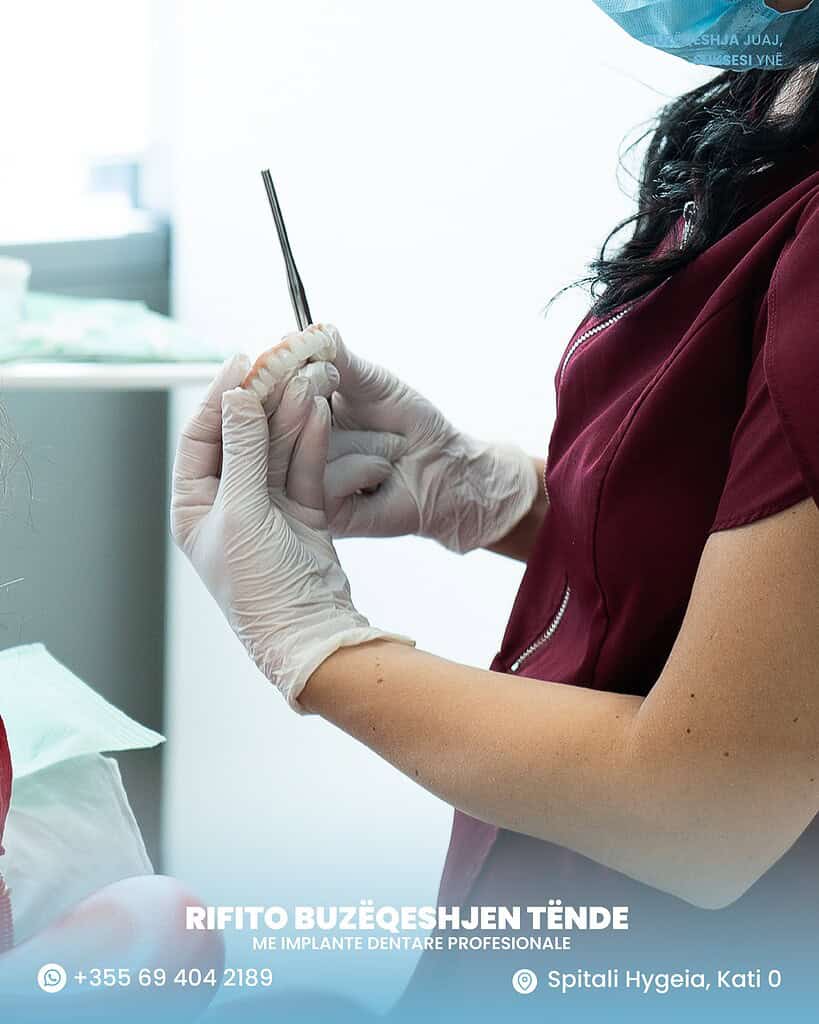
Hygeia Dent: dental care within a modern hospital
When travelling for treatment, it is natural to look for an environment where you feel supported. Hygeia Dent is located within a modern private hospital, with access to hospital care 24 hours a day, 7 days a week. For international patients, this means having a hospital facility nearby during their stay, even if a medical need arises outside regular hours.
Access to hospital care complements dental treatment; implant check-ups and the availability of the relevant team should be clarified separately. Before treatment, ask who to contact during the day, at night, and after returning to the country where you live.
These details provide practical reassurance: you know who to contact and what to do.
Plan your return journey alongside your treatment
A well-organized trip begins before you purchase your airline ticket. Share your available dates, medical history, and any dental examinations you have with the Hygeia Dent team. After the assessment, you can discuss the length of your stay and the stages of treatment.
Contact Hygeia Dent to schedule your dental implant consultation in Albania. By allowing time for treatment, rest, and a check-up before departure, you can prepare for your journey home with greater peace of mind and a clear plan for your smile.