Every year, millions of Europeans find themselves sitting in a dentist's waiting room, staring at a treatment plan that costs more than a family holiday. For many, the response is to simply delay — to put off that implant, that crown, that full smile restoration — until the price somehow becomes manageable. For a growing number of others, the response is to look beyond their home country and discover that the same treatment, performed to the same standard, can cost a fraction of the price just a short flight away.
But the moment you start researching dental care abroad, a question follows you everywhere: is this actually safe, or is it just cheap? It's a fair question, and it deserves a thorough answer. Because there is a very real difference between dental care that is cheap and dental care that is genuinely affordable — and understanding that difference could be one of the most important things you do before you book your first appointment.
Why the Price Gap Exists in the First Place
To understand why dental treatment in countries like Albania costs so much less than in Western Europe, you need to look at the economics rather than assume something is being compromised.
In the UK, Germany, or Italy, a dental clinic carries enormous overheads. Commercial rent in major cities is staggering. Staff wages, including receptionists, dental nurses, hygienists, and lab technicians, reflect the local cost of living. The dental laboratory that produces your crowns or prosthetics charges prices aligned with a Western European economy. All of these costs are passed on to the patient, and they add up quickly.
In Albania, the same clinic — with the same equipment, the same implant brands, and highly trained dentists — operates in a completely different economic environment. Rent is lower. Salaries are competitive locally but significantly lower in euro terms. Laboratory costs are reduced. None of this means quality is reduced. It means the structural cost of delivering care is simply lower, and that saving is passed directly to the patient.
This is the foundation of affordable dental care abroad. It is not about removing things from the process. It is about the reality that high-quality dentistry does not have to cost a Western European price to be delivered to a Western European standard.
Cheap and Affordable Are Not the Same Thing
The confusion between cheap and affordable is understandable, but it matters enormously when you are making decisions about your health.
Cheap dental care gets its price by cutting something out of the equation — and that something is usually quality. It might be the grade of materials used in your implant or crown. It might be the experience level of the dentist performing your procedure. It might be the diagnostic process, where corners are cut to move patients through faster. It might be the aftercare, which is deprioritised once payment has been received. Whatever form it takes, the saving is achieved by removing value, and that removal tends to show up eventually — often at a cost that far exceeds what was saved.
Affordable dental care is an entirely different proposition. The price is lower because the underlying costs are genuinely lower, not because shortcuts have been taken. The diagnostics are thorough. The materials are internationally certified. The dentists are properly qualified. The treatment plan is detailed and transparent. The only thing that changes compared to a clinic in Munich or Milan is the number at the bottom of the invoice.
How to Spot the Difference Before You Commit
Knowing the distinction in theory is one thing. Being able to identify it in practice, when you are comparing clinics and trying to decide who to trust with your teeth, is another matter entirely.
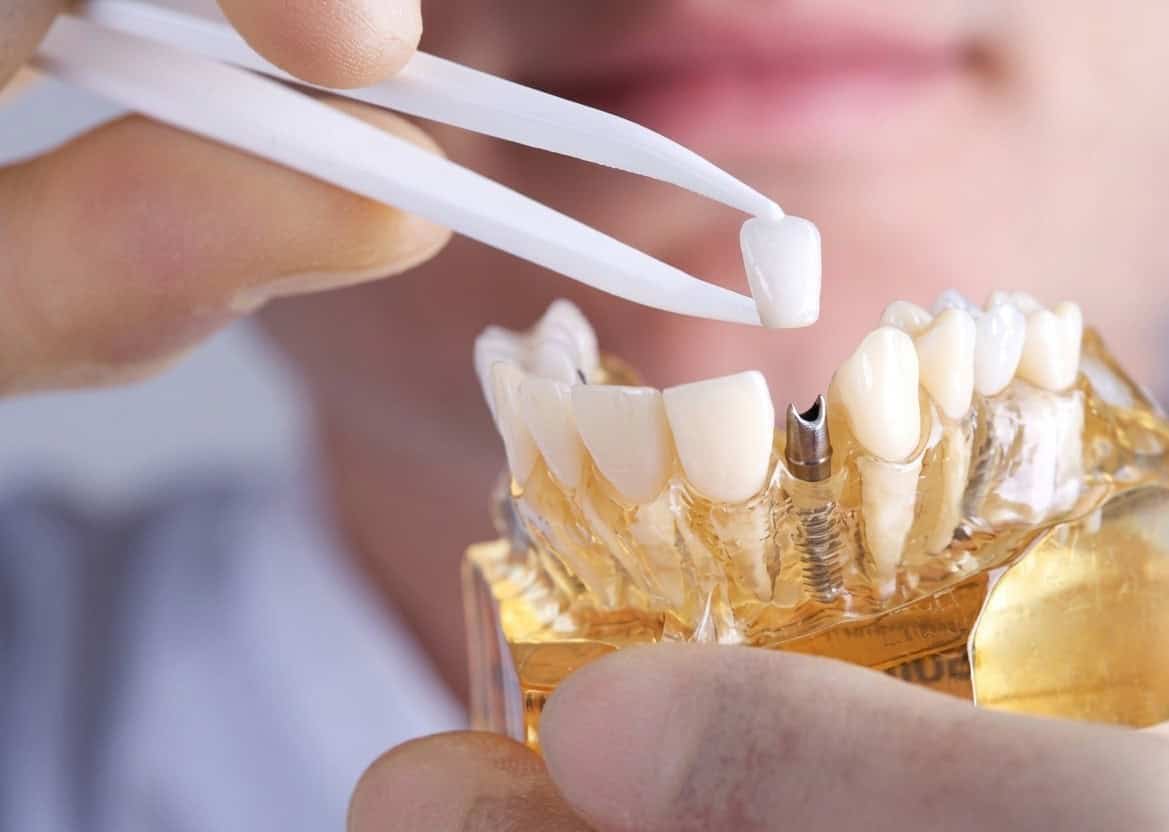
The first thing to look at is materials. Any reputable clinic abroad should be able to tell you exactly which implant system they use and which laboratory produces their prosthetics. Internationally recognised brands like Straumann, Nobel Biocare, and Osstem are used by leading clinics in Albania just as they are used in the best practices across Western Europe. If a clinic is vague about this, or if you cannot verify the brand they mention, that vagueness is itself a warning sign.
The second thing to examine is the consultation process. A clinic that is serious about the quality of its work will insist on a thorough assessment before recommending any treatment. This means proper X-rays, and in most implant cases a full CBCT scan to assess bone density and structure. It means a written treatment plan that itemises every procedure and every cost. It means time taken to explain what will happen, why, and what the realistic outcomes are. If a clinic is pushing you toward a booking before it has properly assessed your situation, step back.
The third indicator is transparency around qualifications. In Albania, dental professionals complete a rigorous university training programme, and many specialists have pursued advanced studies or postgraduate training in Italy, Germany, Austria, or other EU countries. Membership in international dental associations, continuing professional development, and a history of treating international patients are all things a quality clinic should be willing to talk about openly. If the credentials are hard to find or never mentioned, ask why.
The Most Common Red Flags to Watch For
Experience has shown that patients who have poor experiences with dental care abroad almost always encountered warning signs they didn't know how to read at the time.
A clinic that quotes a dramatically lower price than every other clinic in the same country is worth questioning. Healthy price competition exists, but if one clinic's prices sit far below the local average, it is worth asking how. A clinic that refuses to send a detailed written treatment plan before you travel is another concern — reputable practices understand that international patients need to plan their trip around a clear scope of treatment and will provide this without hesitation.
Be cautious of clinics that cannot show you verified patient reviews or documented before-and-after cases. Patient outcomes are the most honest measure of a clinic's quality, and a practice that has treated significant numbers of international patients will have plenty of evidence to share. Absence of this evidence is not always a red flag on its own, but combined with other concerns it becomes more significant.
Finally, pay attention to how a clinic communicates with you before you arrive. Are your questions answered thoroughly? Are they patient with your concerns? Do they seem genuinely interested in finding the right treatment for your situation, or are they primarily focused on getting you to confirm a booking? The quality of communication before your visit often reflects the quality of care you will receive during it.
Albania as a Case Study in Genuine Affordability
Albania has become one of Europe's most sought-after destinations for dental tourism, and for good reason. The country offers a combination of factors that is genuinely difficult to match elsewhere — highly trained dental professionals, internationally certified materials, modern clinic infrastructure, and prices that can be fifty to seventy percent lower than equivalent treatment in the UK, Italy, or Germany.
Tirana, the capital, is easily accessible from most European cities with direct or one-stop flights, and the city itself has developed considerably as a destination in its own right. Patients who visit for dental treatment often find the experience far more positive than they expected — a relaxed and welcoming environment, excellent food, genuinely warm hospitality, and a city with far more to offer than many people realise before they arrive.
The dental sector in Albania has also matured significantly. Clinics that have been serving international patients for years have refined their processes specifically for patients travelling from abroad — efficient scheduling, remote consultations before travel, detailed planning to minimise the number of trips required, and structured aftercare that takes into account that patients are returning to their home country.
What Affordable Care Actually Looks Like at Hygeia Dent
At Hygeia Dent, every patient journey begins with a free remote consultation. Before you commit to anything, before you book a flight, before any costs are involved, you have the opportunity to share your dental records, X-rays, or photographs and receive an honest, detailed assessment of your situation and a clear treatment plan with full pricing.
We use internationally certified implant systems and work with high-quality dental laboratories to produce crowns, veneers, and prosthetics that meet the same standards you would expect from a top clinic in any European country. Our team includes specialists with advanced training and years of experience treating patients from Italy, Germany, the UK, Switzerland, and beyond.
Our prices are lower than Western European equivalents not because we have reduced what we offer, but because Albania's economic reality makes it possible to deliver exceptional care at a genuinely accessible price. We are transparent about this, and we are transparent about everything else — the materials we use, the procedures we recommend, the timeline of your treatment, and what to expect at every stage.
The Bottom Line
Affordable dental care abroad is real. It is safe. It is being chosen by an increasing number of informed, discerning patients across Europe who have done their research and made a decision that makes both financial and clinical sense. But it requires the same careful evaluation you would apply to any significant healthcare decision.
Ask the right questions. Verify the materials. Check the credentials. Look for transparency, thoroughness, and genuine willingness to answer your concerns before you commit. The difference between cheap and affordable shows up in the details — and a clinic worth trusting will always be happy to show you those details.
If you are considering dental treatment abroad and want to understand what Hygeia Dent can offer you specifically, reach out for a free consultation. There is no obligation, no pressure, and no cost — just honest answers to your questions.