


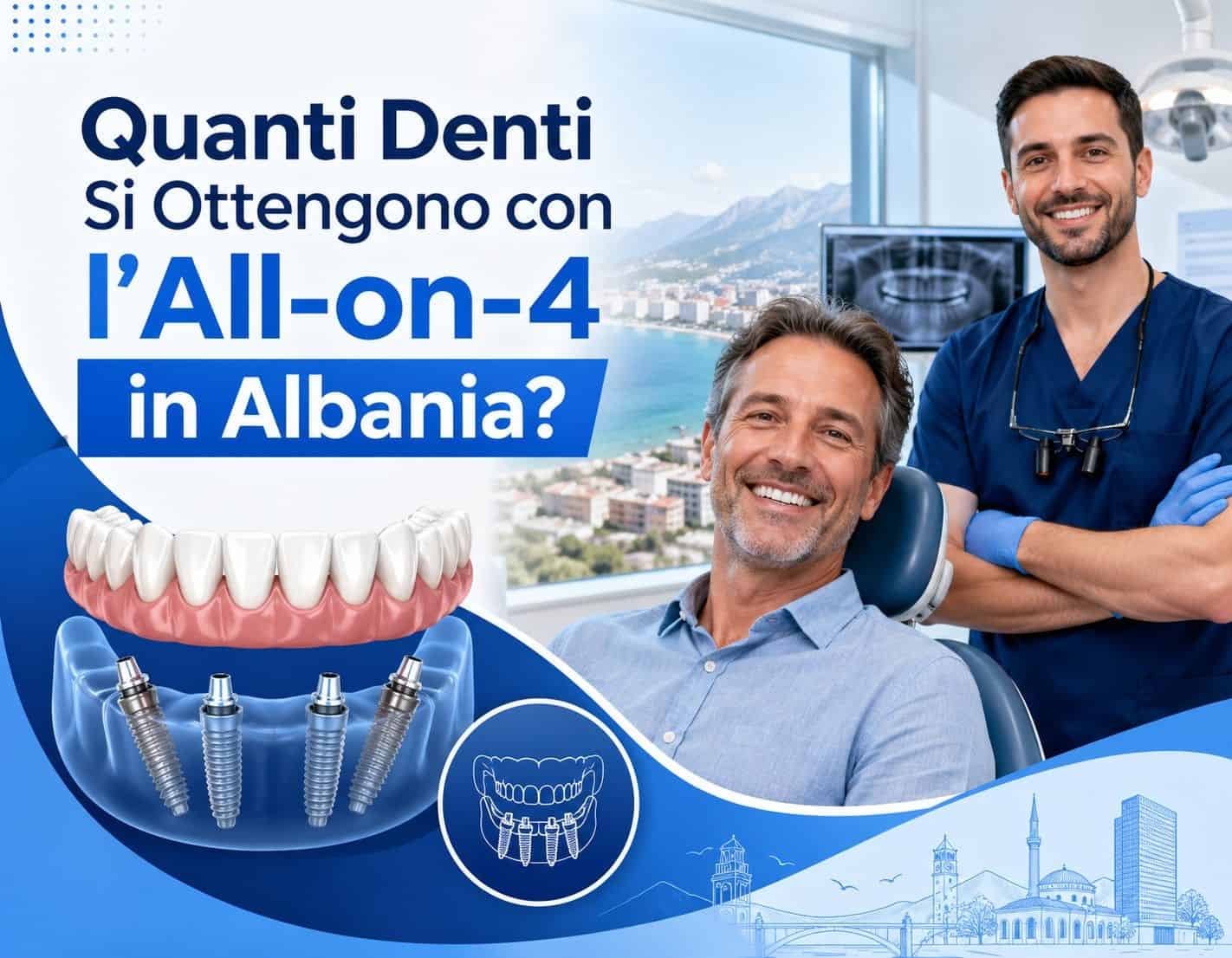
It's one of the first questions people search for online when they discover All-on-4. And it's also one of those questions that rarely gets a direct answer – dental websites tend to talk about implants, surgical technique, materials. But how many teeth are there, concretely, at the end of the treatment?
The answer is more nuanced than it seems, and understanding it makes all the difference when considering if All-on-4 is the right solution for you.

The direct answer: usually between 10 and 14 teeth per arch
A standard All-on-4 prosthesis generally includes between 10 and 14 dental elements per arch. In most cases, the aim is 12, which is considered the optimal number for combining natural aesthetics and complete chewing function.
So, if you have All-on-4 on both arches — upper and lower jaw — you end up with 20 to 28 teeth in total, depending on the treatment plan agreed with your specialist.
To make a comparison: a full adult set of teeth has 32 teeth, including the four wisdom teeth. Excluding the wisdom teeth – which many don't have, or have removed – that's 28. The All-on-4 prosthesis fits perfectly within that range.
Why isn't it always 14 teeth?
The exact number depends on several factors, and the clinical team determines it during treatment planning — it's not an arbitrary choice.
The size of the arch
Not all smiles are created equal. A wide jaw can more comfortably accommodate 14 teeth; a narrower one might make a 10 or 12-tooth prosthesis preferable to avoid an unnatural look or bite problems.
The location of the facilities
The four implants are placed in specific points of the bone, and the prosthesis must be distributed evenly across them. The geometry of the prosthesis — how many elements it includes and where they are located — is studied to ensure a uniform load on all four implants.
The patient's aesthetic needs
In some cases, particularly when dealing with just one arch, the tooth count is calibrated to best match the natural teeth in the opposing arch. The aim is always a harmonious result, not just a number.
The type of prosthesis
Temporary prostheses – those fitted immediately after surgery, during the osseointegration phase – can have a different number of units compared to the definitive prosthesis. This is normal and is explained to the patient before surgery.

Where are these teeth found in the mouth?
A legitimate question. With 12 teeth per arch on a dentition that naturally has 14 (excluding wisdom teeth), one wonders: which ones are missing?
These are generally the second molars – the very back teeth. It is not a major limitation. The second molars contribute to chewing, but the teeth that take the main load are the premolars and the first molars, all of which are present in the denture. The chewing function remains complete for the vast majority of foods.
In some cases, with optimal bone volume and favourable surgical planning, it is possible to include even second molars. But when this is not possible, patients rarely notice it in their daily lives.
Does the All-on-4 prosthesis look like real teeth?
This is the real concern of many patients. Not so much the number, but the appearance. Nobody wants to have a mouth that clearly looks “fake.”.
The honest answer is: it depends on the material and the quality of the prosthetic design.
An acrylic resin prosthesis – often used as a temporary solution – looks discreet but not excellent. Over time it can lose its shine, can become stained, and up close it's clear they aren't natural teeth.
A monolithic zirconia prosthesis – the material we use for final restorations here at Hygeia Dent – is a completely different matter. The translucency of zirconia mimics that of natural enamel very well. The colouring is personalised to match the patient's complexion and aesthetic preferences. The result, in the vast majority of cases, is indistinguishable from natural dentition to the naked eye.
Shape, size, colour, position – everything is designed before creation, often with digital simulations that the patient can see and approve. You don't get to the final prosthesis without knowing exactly what it will look like.
All-on-4 on a single arch: does it make sense?
Absolutely, and it's not uncommon. Many patients have serious problems with only one of the two arches – for example, they have lost all their upper jaw teeth but still retain some of their lower ones.
In these cases, All-on-4 is only performed where needed, and the aim is to create a prosthesis that integrates aesthetically and functionally with the natural teeth of the opposing arch.
The result can be excellent, but it requires careful planning. The occlusion – that is, the way the upper and lower teeth meet when you close your mouth – must be correct, otherwise chewing and wear problems will arise over time.
And All-on-6 or All-on-8? Do they change the number of teeth?
Generally speaking, no. The number of implants doesn't necessarily correspond to the number of teeth in the prosthesis.
Whether 4, 6, or 8 implants are used for anchorage, the supported prosthesis can have the same number of elements – between 10 and 14 per arch. What changes with more implants is the load distribution and the prosthesis stability, not the number of visible teeth.
The difference between All-on-4, All-on-6 and All-on-8 concerns biology and biomechanics, not the aesthetics of the final result. Visually, the three solutions can be identical.
If you're considering which of the three solutions is best for you, our page-dental implants in Albania offers a comprehensive overview, and our team is available for a free personalised assessment.

And what happens to the teeth you already have?
If you still have teeth – even a few, even in a poor state – the protocol is to assess them before the surgery. Those that can be saved, are saved. Those that cannot, are extracted before or during the same surgical session.
You don't have to arrive already toothless to have All-on-4. Many patients who come to us still have some remaining teeth – perhaps compromised, perhaps painful – and the process begins precisely with an assessment of what to keep and what not to.
How the prosthesis is made: the step-by-step process
It’s not that on the day of the surgery, teeth are extracted, implants are placed, and an arbitrary prosthesis is fitted. There's a design process that begins before the surgery and concludes with the final prosthesis.
Diagnostic phase. Cone beam CT, digital impressions or intraoral scans, photographs. All serve to build a precise digital model of your mouth.
Prosthetic design. Based on diagnostics, the team designs the prosthesis – number of elements, shape, size, colour. In many cases, a digital preview can be seen before proceeding.
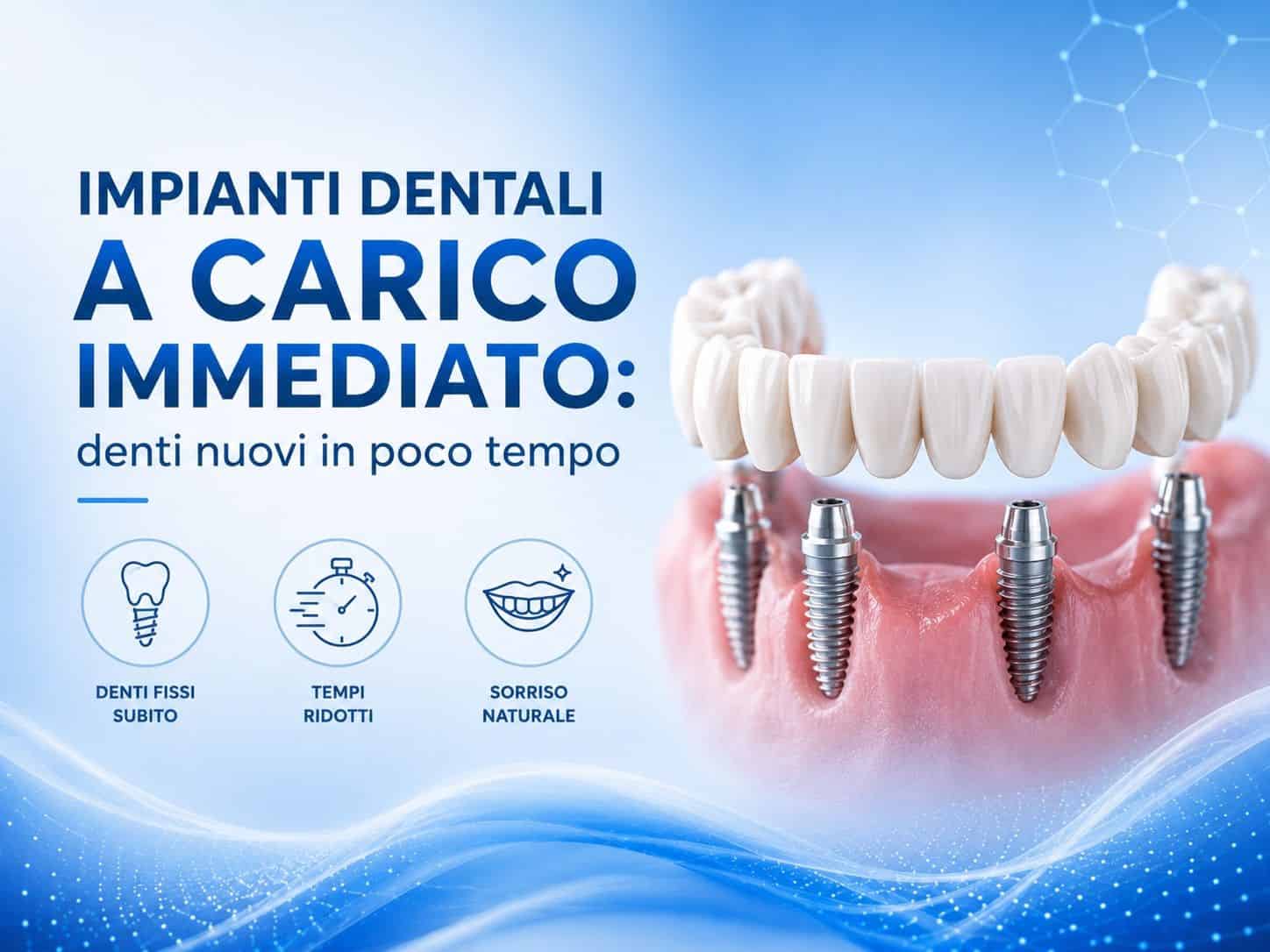
Surgery and temporary prosthesis. On the day of surgery, the implants are placed, and in the hours that follow, the temporary prosthesis is fitted. You leave the clinic with your teeth.
Osseointegration. In the following months, the implants integrate with the bone. During this period, the temporary prosthesis protects the implants and allows you to eat and speak normally.
Definitive prosthesis. Once osseointegration is complete, the definitive prosthesis – usually made of zirconium – is created and fixed to the implants. From this point on, it is your definitive dentition.
To explore every aspect of the treatment, from the initial consultation to the procedure, you'll find everything on our dedicated page for the All-on-4 implants in Albania.
How much do you save by having All-on-4 in Albania?
Italian patients who choose Hygeia Dent save on average up to 70% compared to the quotes received in Italy for the same treatment — including zirconium prostheses.
We do not publish fixed prices because every case is different. The cost depends on the clinical situation, the number of arches to be treated, the materials chosen and any preparatory treatments. To get a real and personalised quote, you can contact us free of charge – you can even send us your X-rays from home, before making any decisions.
If you want to understand how the pathway works for patients coming from Italy, our section on Dental tourism in Albania Explain everything: from logistics to timings, from guarantees to follow-up.

Frequently asked questions
With All-on-4, can I eat everything normally?
Yes, once the treatment with the definitive prosthesis is completed. In the first few months, during osseointegration, you follow some dietary guidelines — nothing too hard or sticky. Then you can eat normally again, including foods that would have been difficult with removable dentures.
Can denture teeth break?
It's rare with zirconia, which is one of the most durable materials in dentistry. With acrylic resin it's more likely, especially in case of falls or impacts. In any case, a fracture of the prosthesis does not compromise the implants – the prosthesis is repaired or replaced.
Can I choose the colour of the teeth?
Yes. The colour is agreed upon together before the prosthesis is made, using a standardised shade guide. The aim is to find the most natural tone for your complexion and your preferences.
Is the prosthesis noticeable when you speak?
With a well-designed and well-made prosthesis, no. Pronunciation might require a few days of adaptation, especially for fricative sounds, but in the vast majority of cases, you'll be speaking normally again in a short time.
What happens if I want more teeth than the initial plan?
If clinically possible, it can be discussed. However, prosthetic planning has a precise technical logic — every modification is assessed within the overall context of the treatment, not simply added because it is desired. The team always explains the reasoning behind each choice.



 English
  Italian
  Albanian
  Spanish
  German