It's one of the first questions patients ask us. Even before the cost, even before the details about the procedure. The question is always the same: “But how long does it last?”
And that's a very fair question. Having All-on-4 treatment is a major decision – clinically, financially, emotionally. Nobody wants to find out five years down the line that something isn't right. Nobody wants to start all over again.
So let's talk about it honestly. No exaggerated promises, no downplaying the risks, no vagueness that's often found online on these topics.

The short answer — and then the long one
The short answer is this: All-on-4 titanium implants, if they integrate properly and are carefully maintained, can last a lifetime. This is not hyperbole – it is a reality supported by decades of scientific literature on dental implants.
The prosthesis that rests on the implants, on the other hand, has a more limited lifespan. Depending on the material and daily use, it is expected to last 10 to 20 years before revision or replacement.
But this short answer hides a lot of variables. And the variables, in this case, make all the difference.
Implants and prosthetics: two different things
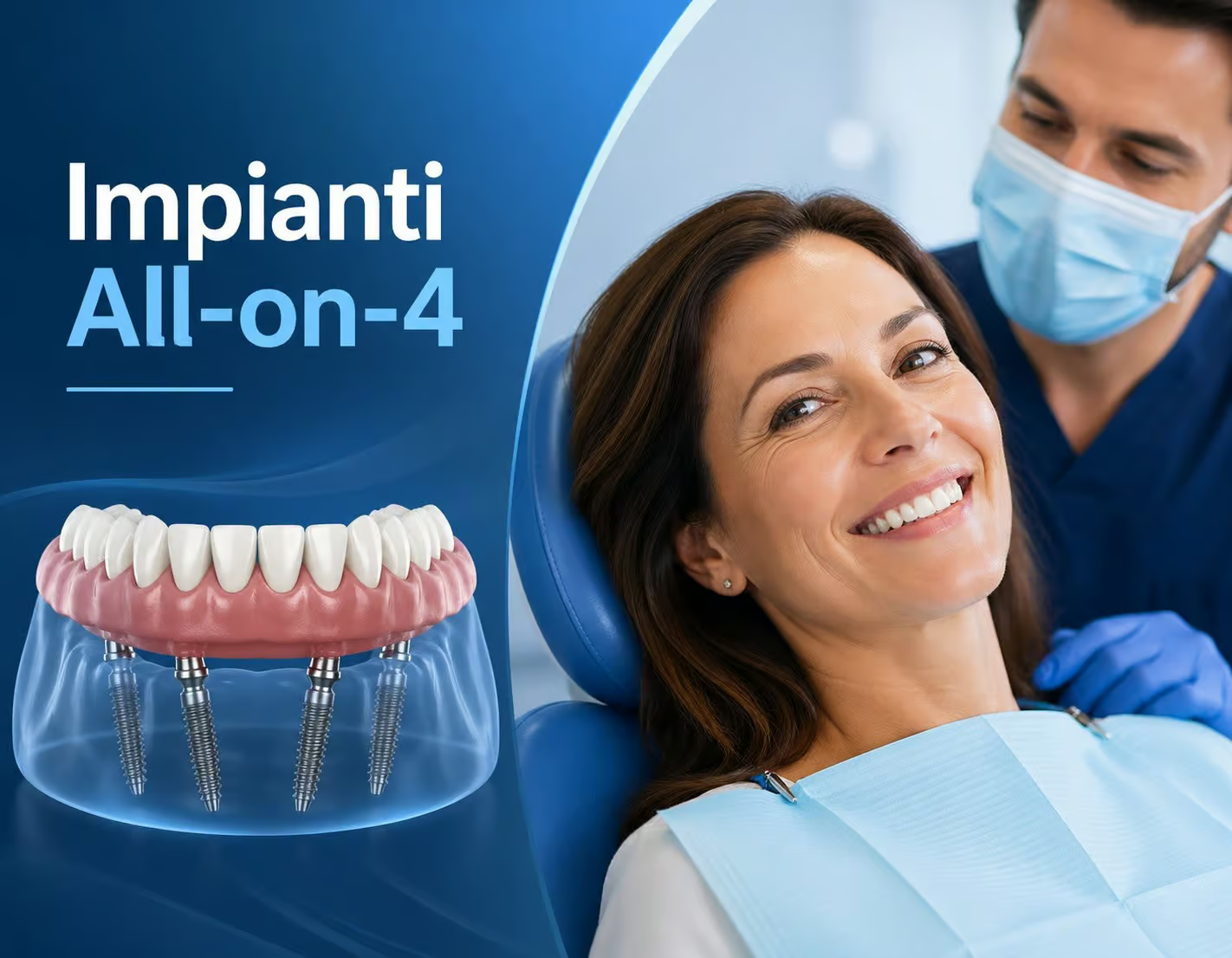
One of the most common mistakes is talking about 'All-on-4” as if it were a single object. In reality, it is made up of two distinct elements, with different characteristics and lifespans.
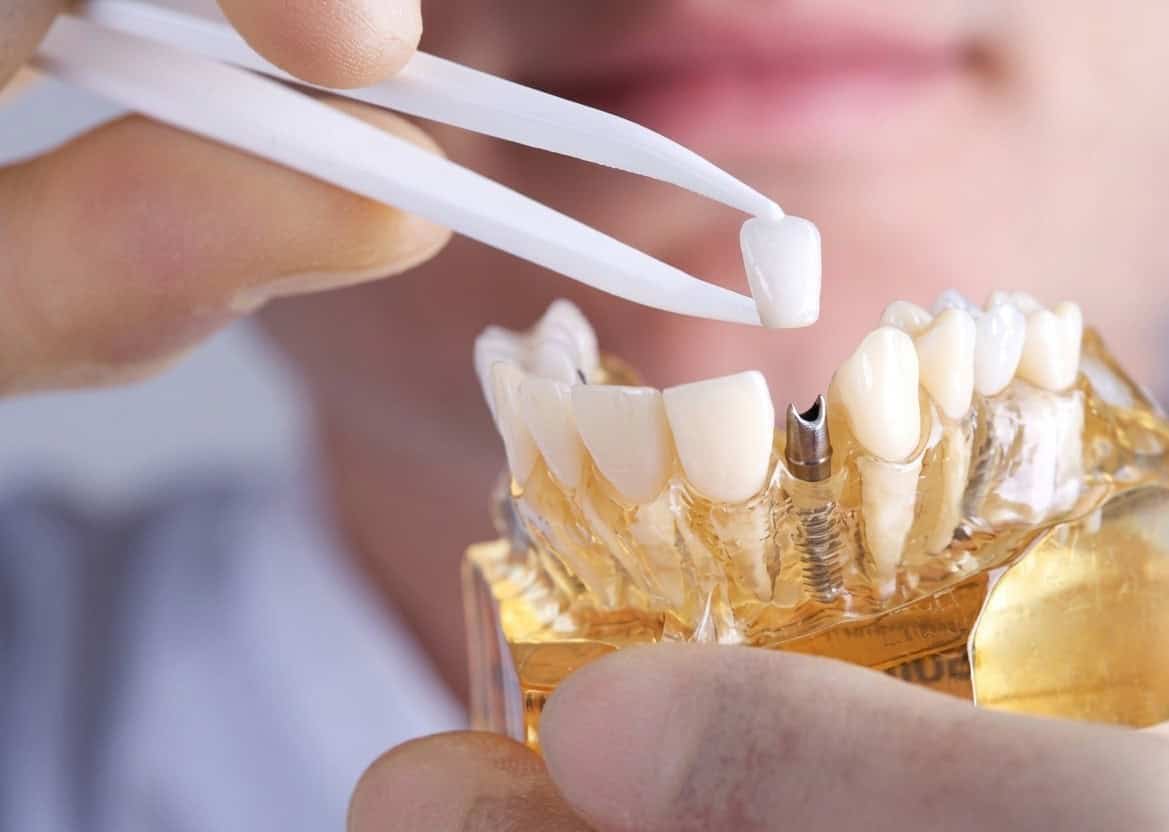
Titanium implants are screws that are inserted into the bone. Titanium is a biocompatible material that, over time, literally integrates with the bone structure – a process called osseointegration. Once correctly integrated, these implants do not wear out, corrode, or degrade with use. The body does not reject them. If external complications do not arise, they remain there.
The prosthesis — that is, the arch of artificial teeth fixed to the implants — is, however, subject to wear and tear. It is used every day, withstands the pressure of chewing, and comes into contact with food acids. Even the best materials wear down over time.
When a patient asks us “how long does All-on-4 last”, they usually want to know both. And the answer is different for each.
What determines the lifespan of implants?
Not all implants last the same amount of time. There are factors that enormously affect longevity — some depend on us as clinicians, others depend on the patient.
Initial osseointegration
Everything starts from here. If the implants integrate correctly in the first few months after the procedure, the foundation is solid. If osseointegration fails – due to infection, premature overload, or other factors – intervention is necessary before proceeding.
This is why the post-operative phase is so important. The instructions we give to patients in the first few months aren't bureaucratic whims — they are the protocol that protects their investment.
Daily oral hygiene
It's the factor that patients underestimate the most. Implants don't decay, that's true. But the tissues around them — gums, bone, mucous membranes — can become inflamed and, over time, deteriorate. Peri-implantitis is the infection of the tissues surrounding an implant, and it is the most common cause of long-term implant failure.
Preventing it is simple: toothbrush, dental floss or interdental brushes, and a professional hygienist at least twice a year. No different from what you would do with natural teeth.
Smoking
Smoking reduces tissue vascularisation, slows healing, and significantly increases the risk of peri-implantitis. Smokers are not automatically excluded from treatment but must be aware that the risk of complications is higher — and that quitting smoking, even just during the healing phase, makes a tangible difference.
Systemic conditions
Certain medical conditions – uncontrolled diabetes, severe osteoporosis, and some drug therapies – affect an implant’s ability to integrate with bone. These are not necessarily reasons to rule out treatment, but they need to be carefully assessed beforehand and managed throughout the process.
The periodic checks
A plant that is regularly monitored rarely fails by surprise. Problems develop gradually, and catching them early is far easier than dealing with them once they have advanced. Those who return for periodic check-ups have implants that last longer — it's a correlation we see continually in clinical practice.

How long does the All-on-4 prosthesis last?
The prosthesis is the component most susceptible to wear. However, “wear” doesn't mean it stops working overnight – it means that over time surfaces wear down, connections loosen, and the occlusion is slightly altered.
An acrylic resin prosthesis — the most commonly used material for temporary dentures — has an average lifespan of 5 to 7 years before needing replacement. It isn't the ideal material for the long term, but it's used in the initial phase because it's easier to adjust during the osseointegration period.
A zirconia prosthesis—the material we use for definitive prostheses at Hygeia Dent—has a significantly longer lifespan. We're talking about 15 to 20 years, sometimes even more, with proper maintenance. Zirconia is one of the hardest and most resistant materials available in dentistry, practically impervious to food acids, and with aesthetics that are maintained over time.
The replacement of the prosthesis, when necessary, does not mean starting all over again. The implants remain in place – only the structure resting on them is changed. It is a much less complex (and less expensive) operation compared to the initial treatment.
All-on-4 vs removable dentures: the difference in longevity
It's worth making this comparison, as many patients come to us after years of wearing removable dentures and want to understand if the change is truly worthwhile.
A traditional removable denture has an average lifespan of 5 to 8 years, after which the gums recede, the bone is reabsorbed, and the denture no longer fits well. Bone remodelling continues over time precisely because there are no implants to stimulate the bone — and this leads to a progressive deterioration of facial structure.
All-on-4 works in the opposite way. Implants stimulate the jawbone, slowing or stopping resorption. The facial structure remains more stable over time. And the prosthesis, being fixed, does not cause the friction damage to the gums typical of removable prostheses.
From the perspective of overall longevity – not just of the prosthesis, but of oral health and quality of life – All-on-4 is in a completely different category.
How to maximise the lifespan of your All-on-4
There are concrete things that every patient can do to protect their investment in the long term.
Rigorous daily hygiene. Electric toothbrush, dental floss or water flosser, interdental brushes where necessary. Peri-implantitis is prevented – one doesn't wait for it to arrive.
No destructive habits. Chewing ice, opening packages with your teeth, grinding your teeth at night (bruxism) – these are all behaviours that accelerate denture wear and can compromise implants in the long term. Those who suffer from bruxism should wear a night guard.
Regular check-ups. At least once a year with the team that performed the treatment, or with a trusted local dentist who can monitor the health of the peri-implant tissues.
Balanced diet in the first few months. During the osseointegration phase, avoiding hard or sticky foods helps the implants to integrate correctly without suffering premature overload.

The journey with Hygeia Dent: from the first visit to the follow-up
Hygeia Dent is not a clinic where you receive treatment and then hear nothing further. We are a dental hospital with structured protocols – and this includes long-term follow-up.
Every patient undertaking an All-on-4 procedure with us receives precise instructions for each stage of the process, from immediate post-operative care right through to the management of the final prosthesis. We are available remotely for any questions or concerns, and when it's time for periodic check-ups, we plan your returns together.
If you want to learn more about how the All-on-4 treatment works in its entirety—from the initial consultation to the definitive prosthesis—you can find everything on our dedicated page on All-on-4 implants in Albania.
For those who are still evaluating which solution is right for them, our section -dental implants in Albania offers a comprehensive overview of the available options.
How much does one save compared to Italy, with the same quality?
Italian patients choosing Hygeia Dent save on average up to 70%% compared to quotes received in Italy for the same treatment. Savings that, projected over the duration of the treatment, become even more significant.
We do not publish price lists because each case is different – the cost depends on the bone situation, the chosen materials, and any preparatory treatments. To get a real figure relevant to your situation, the only way is an individual assessment.
You can request it for free, even by sending your X-rays before coming to Tirana. Our team will analyse them and provide you with a preliminary, no-obligation assessment. You can find all the information to get started on our dedicated page. Dental tourism in Albania.
Note: the indicated savings (up to 70%) is an average estimate based on feedback from our patients and does not constitute an official price. Each treatment plan is assessed individually.

Frequently asked questions about the duration of All-on-4
If a plant fails after years, do I have to redo everything?
No. In the event of a single implant failing, it is assessed on a case-by-case basis. It is often possible to insert a new implant in an adjacent position and keep the existing prosthesis, or with minimal modifications. We do not start from scratch.
Can the prosthesis be repaired without completely replacing it?
Often, yes. Small repairs, adjustments to the occlusion, replacement of individual elements – these are procedures that can be done without replacing the entire prosthesis. It depends on the extent of the damage.
After how many years should I think about replacing my prosthesis?
There isn’t a fixed number. It depends on the material, wear, and hygiene. With a zirconia prosthesis and good maintenance, 15-20 years is a realistic benchmark. Your dentist will tell you when the time is right, based on what they see clinically.
Is bruxism a serious problem for those with All-on-4?
Yes, it is one of the main risk factors for accelerated wear of the prosthesis. It needs to be managed — usually with a night guard — and communicated to the team before the surgery, so that the treatment can be planned accordingly.
Can I have my check-ups with my dentist in Italy?
Absolutely. We will provide you with all the necessary clinical documentation so that your trusted dentist in Italy can follow the progress of the treatment. For more significant reviews, it is preferable to return to us, but routine check-ups can be done locally.