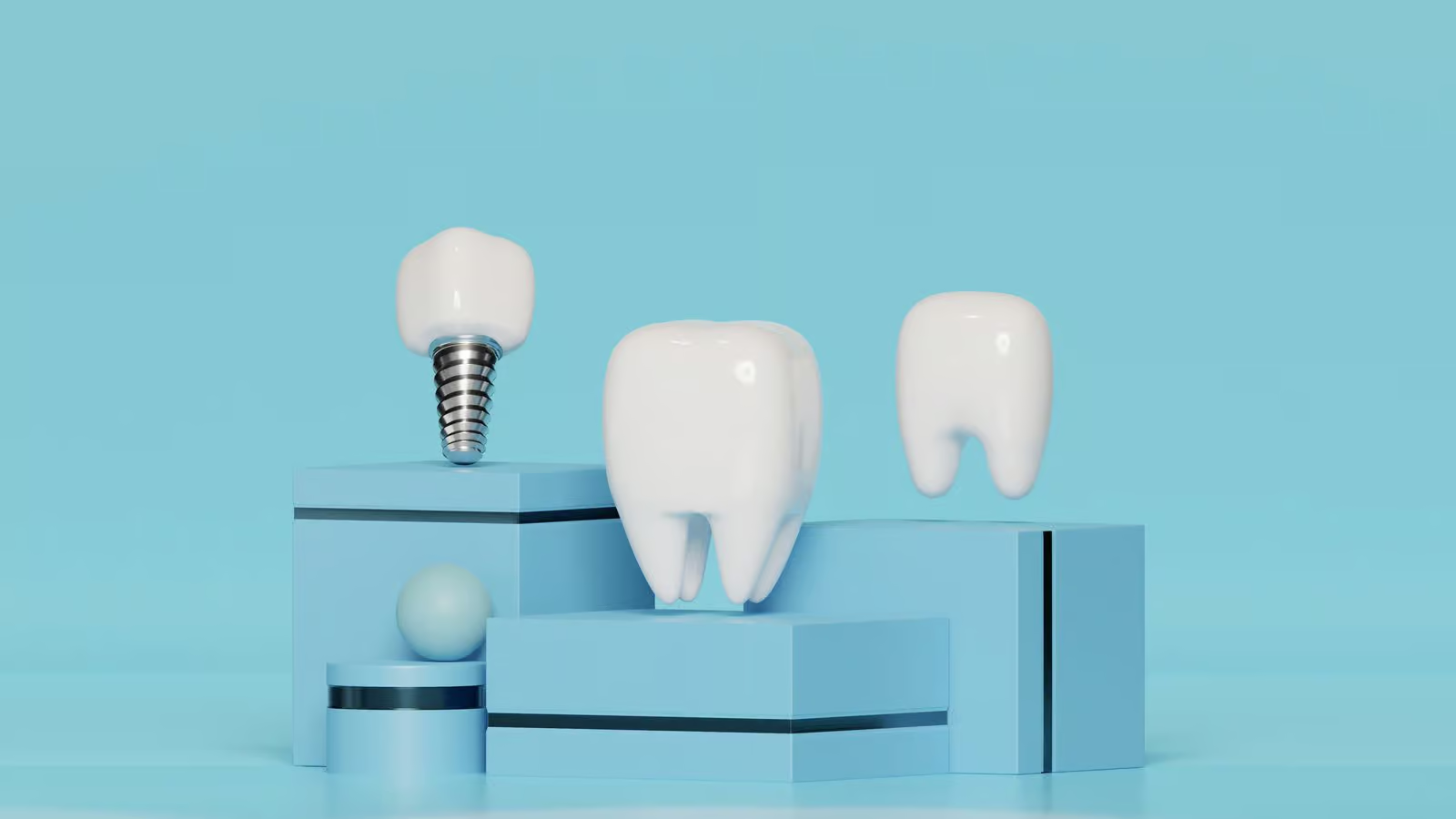
If your dental implant crown is loose, in most cases the cause is a loose connecting screw or the failed cement, not the implant itself. These are common problems and can usually be resolved in a single appointment. However, a loose crown should be checked by a dentist as soon as possible: if neglected, it can damage the components and, more rarely, indicate a problem with the implant or the bone.
In this guide, you will learn why this happens, how to tell how serious it is, and what to do right away.
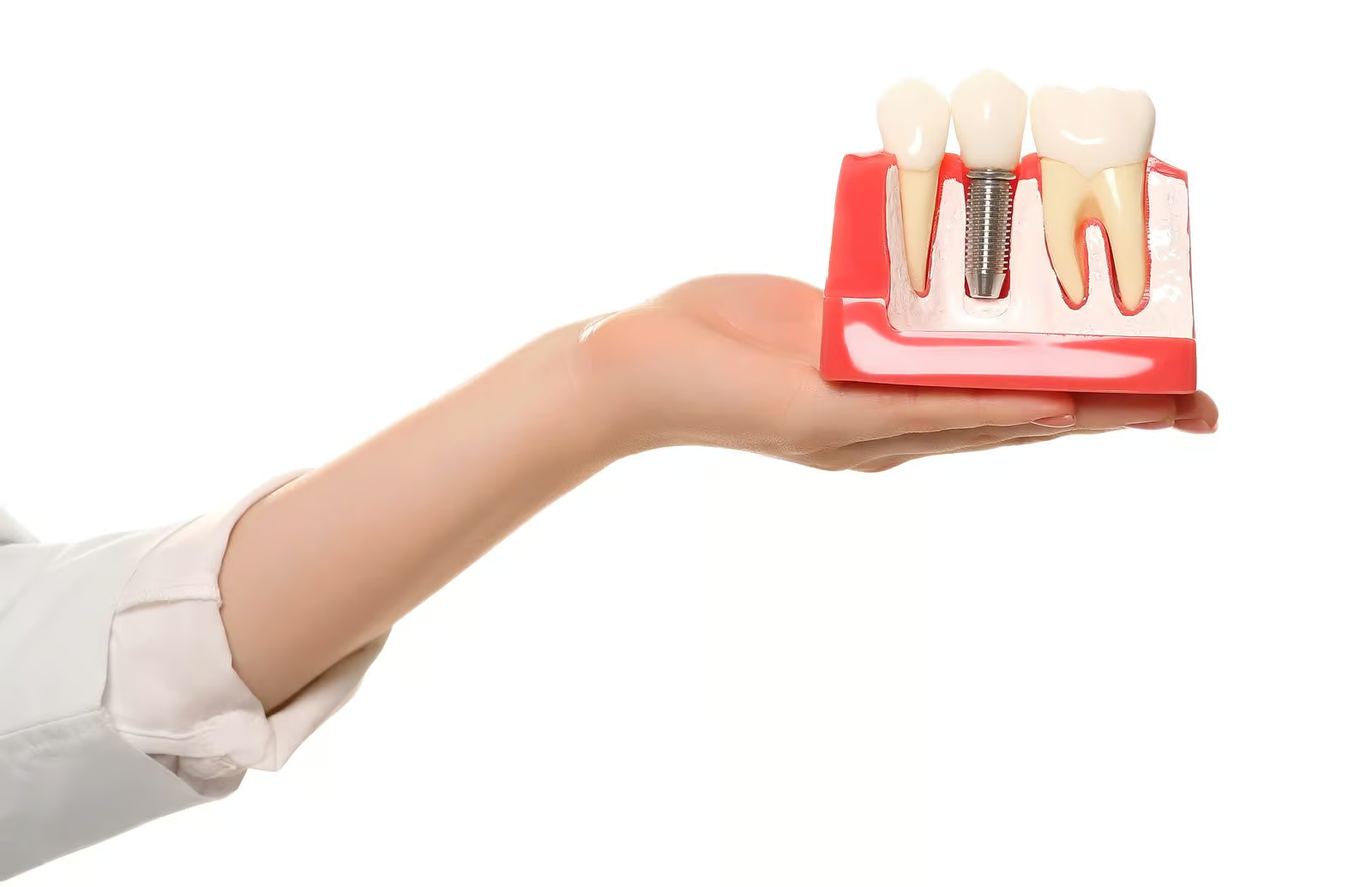
How an implant is made: three different parts
To understand why a crown can become loose, it helps to know that a dental implant consists of three elements:
- The implant (the titanium “root”), placed in the bone.
- The abutment (or post), the connector that joins the implant to the crown.
- The crown, the visible tooth, made of zirconia or ceramic.
These parts are joined by a screw or dental cement. When you notice movement, the dentist’s first task is to determine which of the three parts is moving. The difference is crucial, because the causes and solutions are very different.
The 6 most common causes of a loose crown
1. Loose abutment screw
This is the most common cause. Over time, chewing forces can slightly loosen the screw that holds the implant and abutment together. Usually, the crown starts to move slightly and then becomes increasingly mobile.
Good news: the implant is healthy. The dentist accesses the screw, cleans it and retightens it with the correct torque, or replaces it.
2. Failed cement
If your crown is cemented onto the abutment, the cement may deteriorate or come loose. In this case, the crown may move or even come off completely. Often, simply cleaning the surfaces and recementing it is enough.
3. Bruxism and excessive forces
People who grind or clench their teeth, especially at night, subject implants to forces far greater than normal. These repeated stresses are one of the main reasons screws become loose. A night guard is often the solution to prevent the problem in the future.
4. Improper bite alignment
If the crown contacts the teeth in the opposing arch too early or too forcefully, it receives excessive load with every bite. A small adjustment to the contact point (selective grinding) may be enough to rebalance the forces.
5. Broken crown or component
Less commonly, the crown, abutment or screw itself may fracture. This often happens after trauma or biting down on something very hard. Damaged components must be replaced.
6. Implant problem: peri-implantitis or failed osseointegration
This is the least common but most serious situation. If it is the implant itself that is moving, it may mean that:
- the implant has not integrated properly with the bone (during the first few months);
- è in corso una perimplantite, un’infiammazione che causa perdita di osso attorno all’impianto.
In these cases, treatment is more complex and time is crucial: the sooner action is taken, the greater the chances of saving the implant or replacing it successfully.
How to tell whether the problem is with the crown or the implant
Only your dentist can determine this with certainty, but some signs can help you understand:
| Sign | More likely: screw or cement | Possible implant problem |
|---|---|---|
| Pain | Absent or mild | Often present |
| Gums | Normal | Swollen, red, or bleeding |
| Pus or a bad taste | No | Sì |
| Type of movement | Crown rotation or “clicking” | The entire assembly moves |
| X-ray | Stable bone | Bone loss around the implant |
Remember: even if you have no pain, a loose crown should not be ignored. A neglected loose screw can break or damage the implant connection, turning a simple procedure into a more complex one.
What to do immediately if the crown is loose
- Do not chew on that side and choose soft foods.
- Do not try to tighten or glue it back yourself: DIY glues can damage the components and trap bacteria.
- If the crown comes off, keep it in a clean container and take it to your dentist.
- Keep the area clean using a soft toothbrush, without applying pressure.
- Book a check-up as soon as possible, ideally within a few days.
If you had your implants placed abroad
Many Italian patients receive treatment in Albania and wonder how to deal with a problem once they return home. The advice is simple: contact the clinic that performed the treatment immediately. By sending photos and a recent X-ray, the team can carry out an initial remote assessment and advise you on how to proceed, including with a local dentist for urgent treatment.
Patients treated at Hygeia Dent can contact the Italian-speaking staff via WhatsApp or through the contact form.
How a loose crown is repaired
Treatment depends on the cause:
- Loose screw → tightening or replacing the screw. A short appointment, often without anesthesia.
- Failed cement → cleaning and recementing the crown.
- Broken crown → fabrication of a new crown.
- Damaged abutment → replacement of the abutment.
- Peri-implantitis → deep cleaning of the implant surface, antibiotic therapy and, if necessary, bone regeneration.
- Implant not integrated → removal, healing of the area and possible placement of a new implant (sometimes with a bone graft).
With screw-retained crowns, the dentist can access the screw through a small hole in the tooth surface, without having to replace the crown. This is one reason why many professionals prefer this solution.
Screw-retained or cemented crown: what difference does it make?
Implant crowns can be secured in two ways, and the type of retention affects both the cause of movement and the ease of repair.
Screw-retained crown
- It is attached directly to the implant with a screw, accessible through a small hole sealed with composite resin.
- Vantaggio: se la vite si allenta, il dentista la raggiunge in pochi minuti e la corona si recupera.
- No cement residue beneath the gumline, resulting in a lower risk of inflammation.
Cemented crown
- It is cemented onto an abutment screwed to the implant.
- Vantaggio: superficie del dente senza foro, a volte preferita nei settori anteriori per motivi estetici.
- Disadvantage: if the underlying screw loosens, it may be necessary to cut the crown to access it.
Not sure which type you have? Ask your dentist or the clinic that performed the work: it is useful information to keep in your medical records, along with the implant brand and model.
How to prevent the problem
- Regular check-ups, at least once a year, including a check of the screws and bite forces.
- Thorough oral hygiene: a soft toothbrush, interdental brushes, floss or an oral irrigator.
- Night guard if you grind your teeth.
- Avoid biting hard objects (pens, ice, shells).
- Do not smoke: smoking increases the risk of peri-implantitis.
- Choose original, high-quality components: screws and abutments that are 100% compatible with the implant reduce the risk of loosening.
Hygeia Dent uses internationally recognised implant brands and certified components, with digital planning to ensure that forces are properly distributed from the outset.
Domande frequenti
Is it normal for an implant crown to move slightly?
No. A well-secured implant crown should not move at all. Even slight looseness should be checked.
My implant crown has come off: should I go to the emergency room?
No, it is not a medical emergency. Keep the crown, avoid chewing on that side, and make a dental appointment as soon as possible.
Can the crown be reattached with glue?
Never. Household glues can damage the crown and the implant and make the repair more difficult.
Does a loose screw mean the implant has failed?
No. In the vast majority of cases, the implant is perfectly integrated and the screw simply needs to be tightened or replaced.
Do not delay your check-up
A loose implant crown is almost always a simple problem to resolve, provided it is addressed promptly. Take this warning sign seriously and have the situation assessed by a professional.
Hai dubbi sui tuoi impianti o vuoi una seconda opinione? Invia una radiografia a Hygeia Dent e ricevi una valutazione gratuita entro 24 ore. Scopri di più sui nostri impianti dentali in Albania o contattaci.