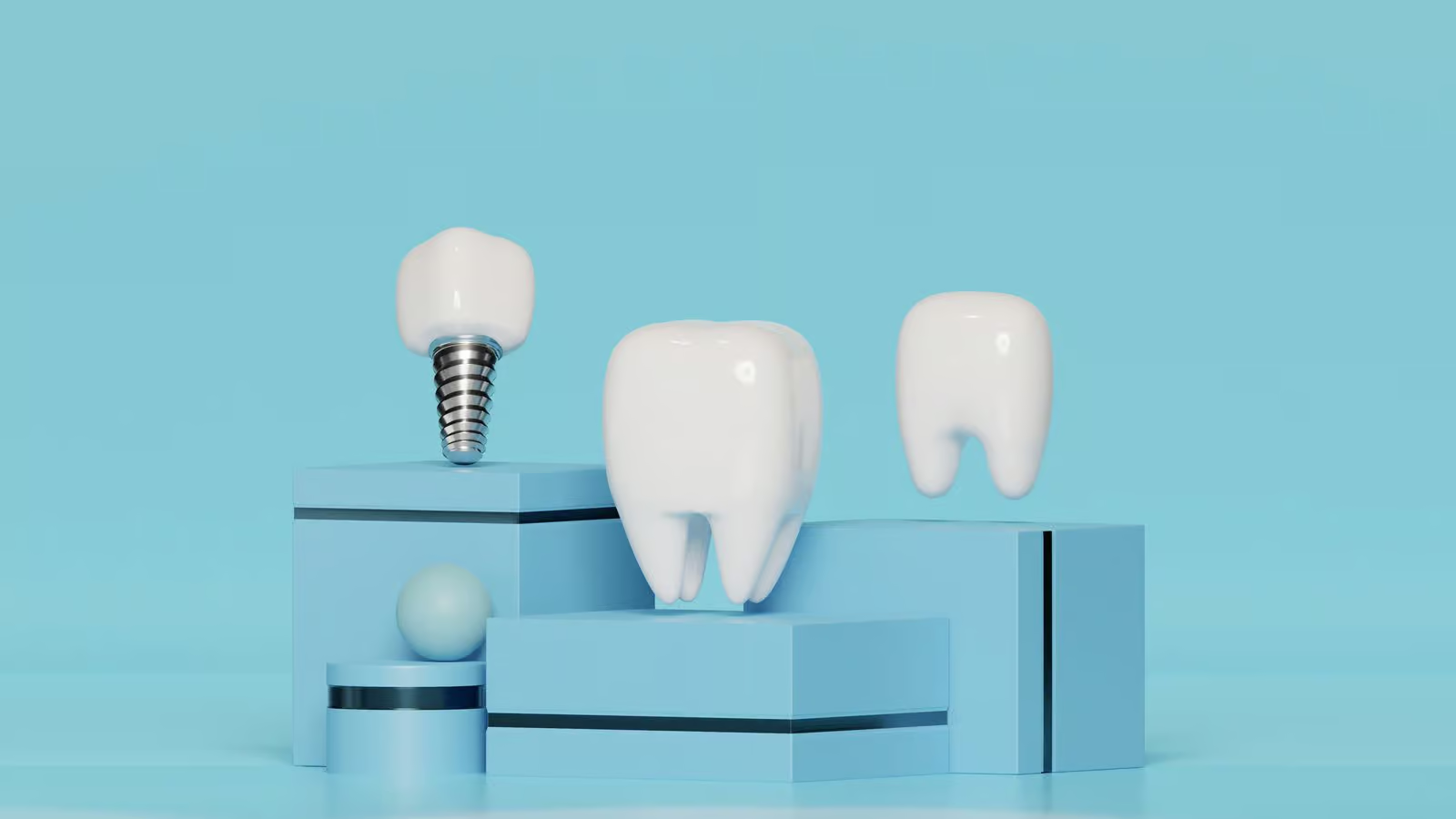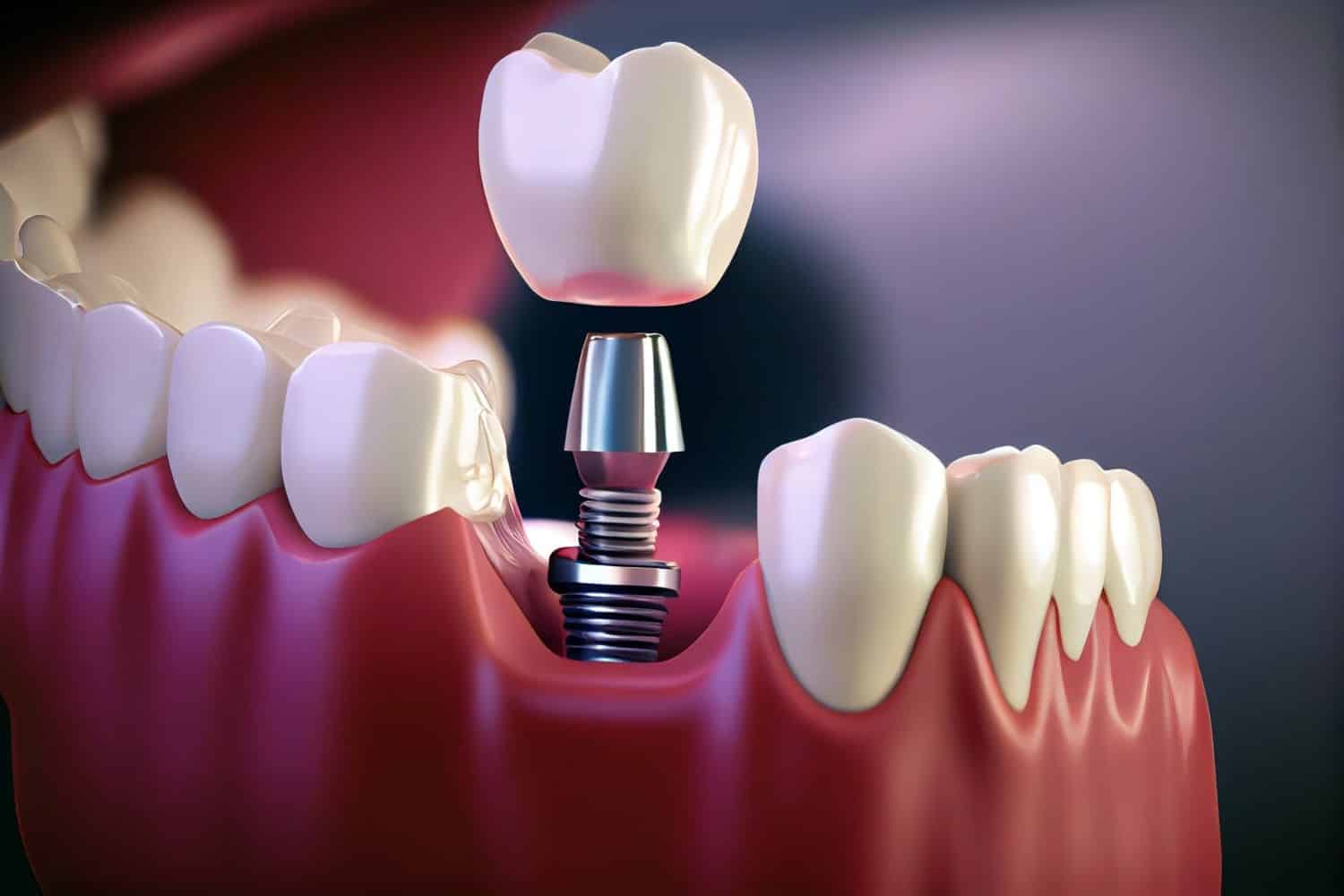
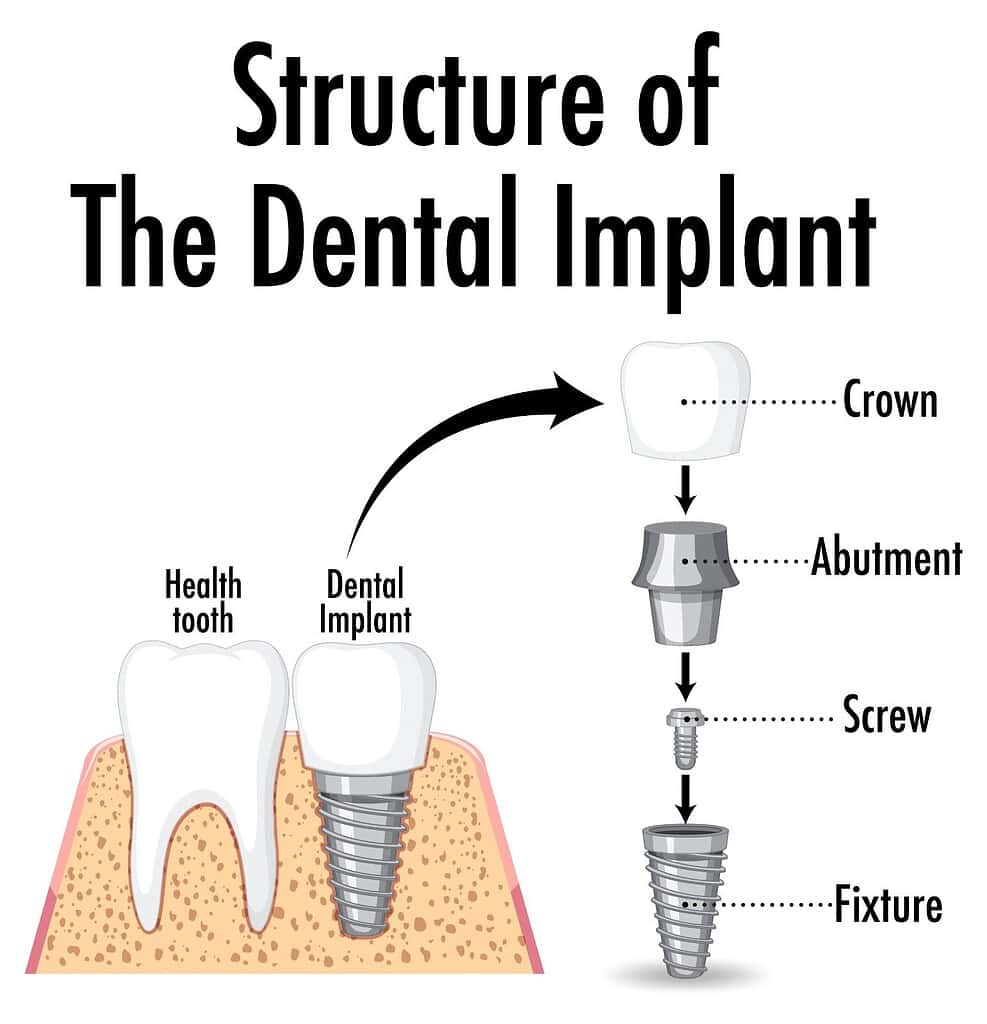
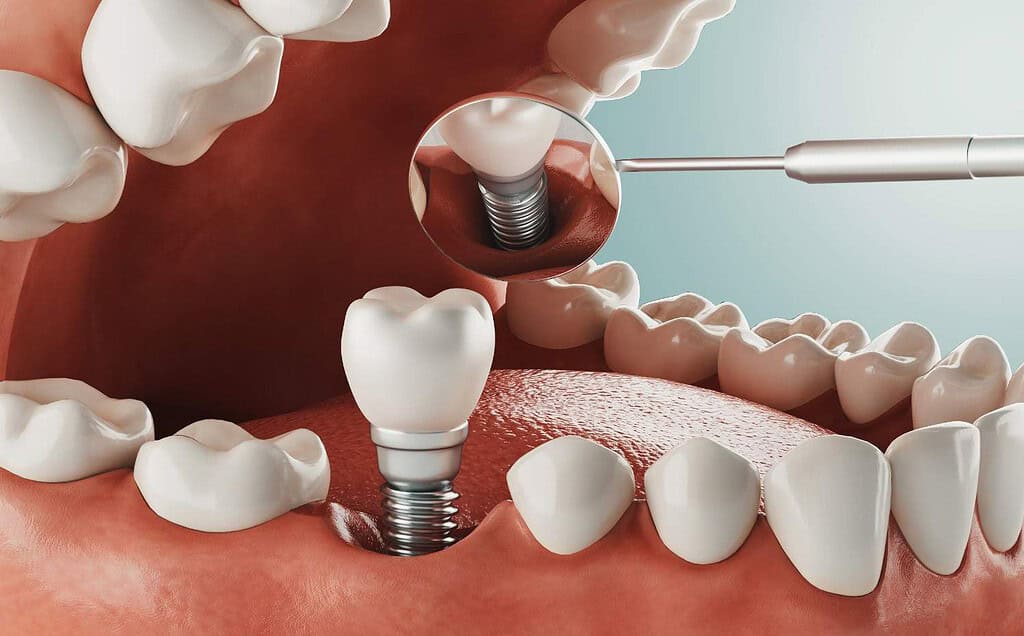
Un impianto dentale sostituisce la radice di un dente con una fixture inserita nell’osso; sopra si monta un abutment (moncone di connessione) e una corona protesica. La combinazione di materiali biocompatibili (titanio/zirconia), superfici trattate, connessioni precise e pianificazione digitale permette osteointegrazione, stabilità e un’estetica naturale.
What Is a Dental Implant (and When Is It Used)?
A dental implant is a medical device that replaces the root of a missing tooth and supports fixed prostheses (crowns, bridges) or implant-supported dentures. It is indicated in cases of single, multiple, or total tooth loss, with the advantages of preserving bone volume, restoring chewing function and aesthetics, and not involving adjacent teeth as happens with some traditional bridges.
The Three Main Parts of a Dental Implant
1) The “Screw” (Fixture)
- What it is: The endosseous portion, usually cylindrical-conical with threading designed to achieve primary stability.
- Function: It osseointegrates with the maxillary or mandibular bone, creating a stable biological anchorage.
- Clinical details: Macro-geometry, thread pitch and depth, surface treatments, and site preparation protocol influence stability and loading times.
2) The Abutment (Post)
- What it is: The component that connects the fixture to the prosthesis.
- Function: Transfers chewing forces, defines the emergence profile, and supports soft tissues.
- Variants: Prefabricated or custom CAD/CAM, in titanium, zirconia, or hybrid solutions to balance aesthetics and strength.
3) The Prosthetic Crown
- What it is: The visible part that reproduces the tooth’s shape and color.
- Materials: Monolithic zirconia, layered ceramics, or high-strength composites, chosen according to aesthetics, available space, and loading.
- Goals: Natural appearance, balanced occlusion, ease of hygiene.
Materials: Titanium vs. Zirconia
Titanium (medical grade): The standard for fixtures thanks to biocompatibility, fatigue resistance, and excellent osseointegration. Suitable for most cases, even with varying bone quality.
Zirconia: A high-performance ceramic, white in color (aesthetic advantage in anterior areas), low plaque adhesion, and good biocompatibility. Choice requires specific indications and accurate planning.
Abutments: Titanium is strong and versatile; zirconia is preferred in aesthetic zones or thin gingival biotypes; hybrids combine the advantages of both.
Digital Planning: The Basis of Precision
A well-made implant begins with a complete diagnosis and accurate digital planning:
- CBCT (Cone Beam): 3D reconstruction of the jaws to evaluate bone thickness/height, anatomy, and vital structures.
- Intraoral scanner: Digital capture of the arches; enables a precise CAD/CAM workflow.
- Matching DICOM + STL: Combining radiological data with digital impressions to design the ideal position, axis, and depth.
- Guided surgery (template): Transfers the digital plan to the operating room, increasing accuracy and predictability.
- Mock-up/Temporary prosthesis: Defines aesthetics and function before the final prosthesis, guiding soft tissue management.
Surgical Protocols: Immediate, Delayed, and Flapless
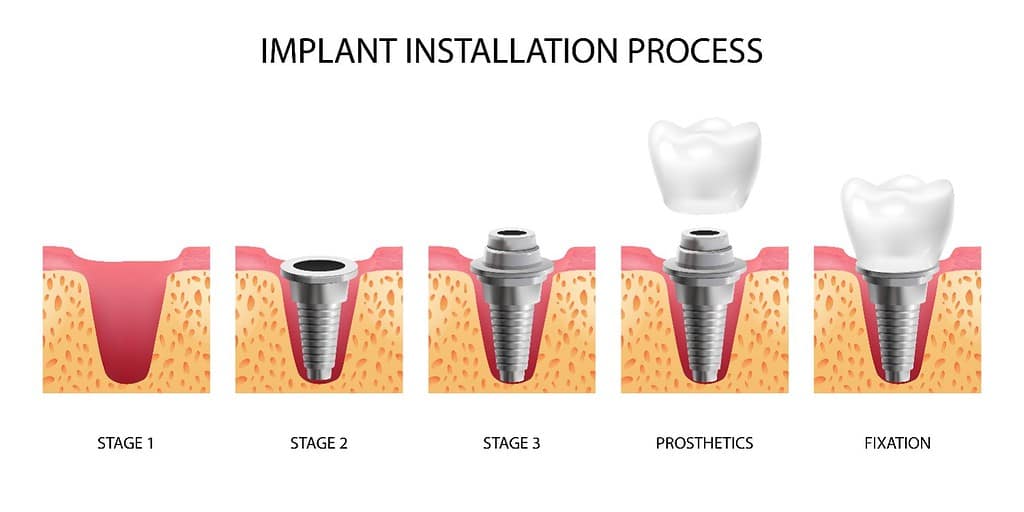
- Immediate (post-extraction): Implant placed right after extraction when primary stability and local conditions are favorable. Reduces overall time and helps preserve tissues.
- Delayed: Implant placement after healing (weeks/months); useful in cases of infection, bone defects, or when regeneration is needed.
- Flapless: Minimally invasive technique without a flap (requires careful case selection and surgical guide), with less discomfort and faster recovery.
- Bone regeneration: In volume deficiencies, GBR, grafts, or short/narrow implants may be indicated.
Surfaces and Connections: Why They Matter
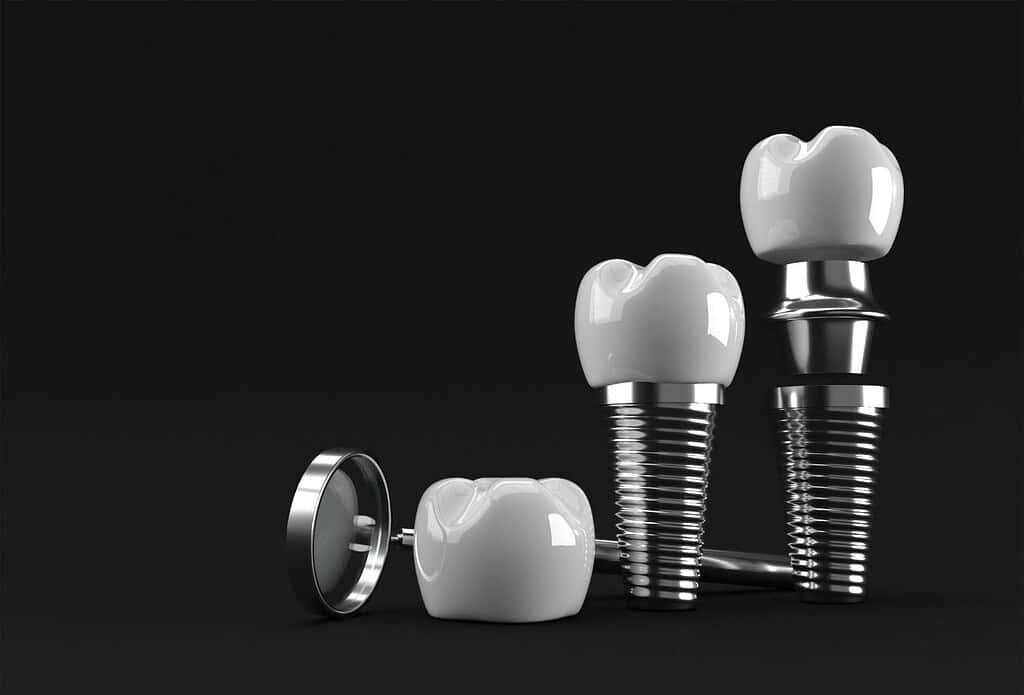
- Surface treatments: Sandblasting, etching, or proprietary technologies create controlled roughness that promotes cell adhesion and accelerates osseointegration.
- Prosthetic connections: Internal or external, conical or hexagonal. Internal conical connections reduce micro-movements and gaps, improving bacterial sealing and load distribution.
- Screws and torque: Correct torque minimizes loosening and maintains long-term mechanical stability.
Primary Stability, Immediate vs. Delayed Loading
Primary stability (achieved at placement) is essential for prognosis. It is assessed clinically and via parameters such as insertion torque and ISQ (Resonance Frequency Analysis).
- Immediate loading: In selected cases, a temporary prosthesis is placed within 24–72 hours, if primary stability and occlusal management are adequate.
- Delayed loading: Final prosthesis placed after full osseointegration; most common when parameters are not optimal.
Implant Prosthesis: Screw-Retained or Cemented?
Screw-retained: Allows retrievability (unscrewed for check-ups or repairs), eliminates risk of residual cement.
Cemented: Useful in certain aesthetic or angulation situations, but requires careful technique to avoid cement residues, a potential mucositis risk.
Full-arch (All-on-4/6): For edentulism, fixed prosthesis on multiple implants distributes loads and restores function and aesthetics in reduced time.
Soft Tissue Management and Emergence Profile
Gum health and contour are critical for aesthetics and hygiene:
- Shaping provisionals: Mold the emergence profile and train tissues to adapt to the new contour.
- Gingival biotype: In thin biotypes, strategies and materials minimizing translucency are preferred.
- Sutures and healing: Atraumatic techniques and hygiene protocols reduce inflammation and favor tissue sealing.
Durability and Maintenance
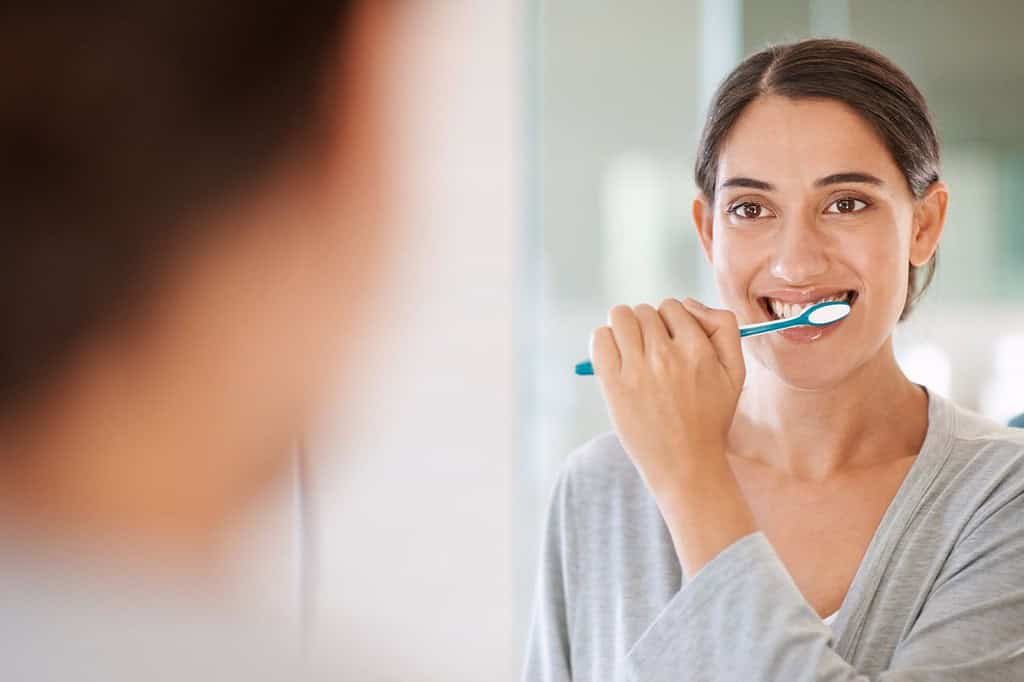
A properly indicated, placed, and maintained implant can last many years. Key factors:
Home hygiene: Interdental brushes, superfloss/specific tools, oral irrigator when indicated.
Regular check-ups: Clinical and radiographic monitoring, customized professional cleaning.
Occlusion: Balanced contacts reduce overload; bruxism must be managed (e.g., bite guard).
Lifestyle: Smoking, uncontrolled diabetes, and poor hygiene increase biological risks.
Risks and Prevention
- Mucositis: Superficial inflammation of peri-implant tissues; reversible with hygiene and early therapy.
- Peri-implantitis: Progressive bone loss around the implant; prevention with check-ups, plaque control, and risk factor management.
- Mechanical complications: Screw loosening, prosthetic fractures; reduced with precise connections, proper torque, and correct occlusal design.
Warning signs: Persistent bleeding, mobility, pain, suppuration, halitosis. If symptoms occur, contact the clinic immediately.
Typical Clinical Examples
Central incisor replacement: Immediate post-extraction implant with guided surgery, immediate screw-retained provisional to shape tissues; final layered zirconia crown for maximum aesthetics.
Fractured lower molar: Delayed placement after healing; titanium fixture with internal conical connection; monolithic zirconia crown to withstand high loads.
Components
| Component | Main Function | Typical Materials | Clinical Notes |
| Fixture (screw) | Bone anchorage & osseointegration | Titanium (standard), Zirconia (selected) | Design & surface = primary stability and integration time |
| Abutment | Connection & emergence profile | Titanium, Zirconia, Hybrid CAD/CAM | Custom improves aesthetics, hygiene, and fit |
| Crown | Aesthetics & chewing function | Monolithic zirconia, layered ceramics, composites | Balanced occlusion = longevity; screw-retained/cemented choice |
Frequently Asked Questions (FAQ)
What are the parts of a dental implant?
A fixture (screw in the bone), an abutment (connection post), and a prosthetic crown that reproduces the tooth.
What is the abutment for?
It connects the screw to the crown, transfers loads, and defines the emergence profile, optimizing aesthetics and tissue health.
Titanium or zirconia: which is better?
Titanium is the standard for biological predictability and strength; zirconia offers aesthetic advantages in selected cases. Choice depends on site, gingival biotype, and case goals.
How long does it take for an implant to integrate?
Times vary depending on bone quality, site, and protocol (immediate/delayed). Prosthetic loading occurs when clinical and/or instrumental stability is deemed adequate.
Can an implant crown be replaced?
Yes. In case of wear or new needs, the crown can be removed and replaced while maintaining the osseointegrated fixture.
Why Choose Hygeia Dent
At Hygeia Dent, we use digital planning (CBCT + intraoral scanner), certified components, and evidence-based protocols. Collaboration between surgeon, prosthodontist, and hygienist ensures a complete path: diagnosis, surgery, prosthetics, and long-term maintenance, with personalized plans for every patient.
Book a first visit or request a consultation to evaluate whether a dental implant is the right solution for your case.