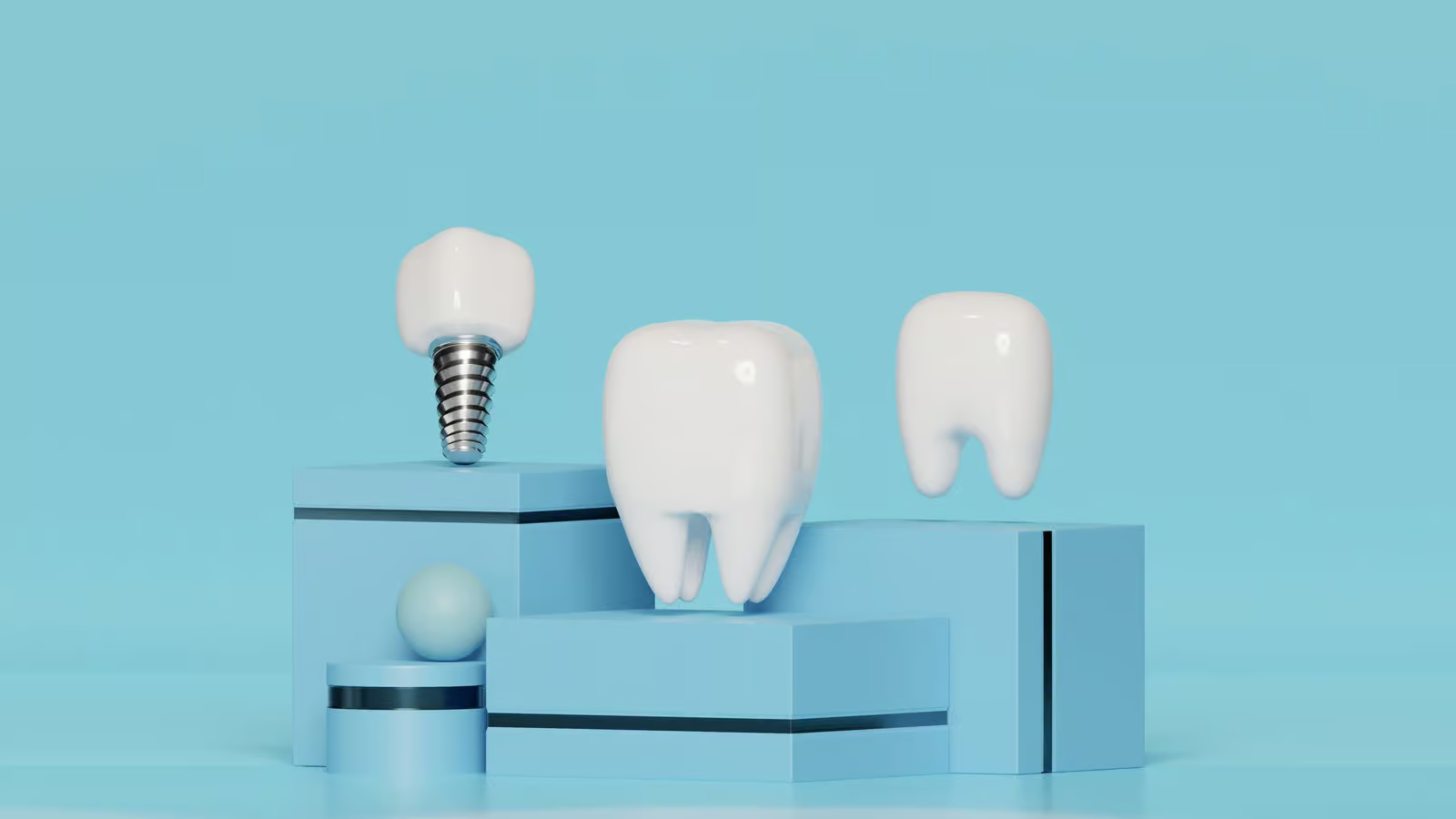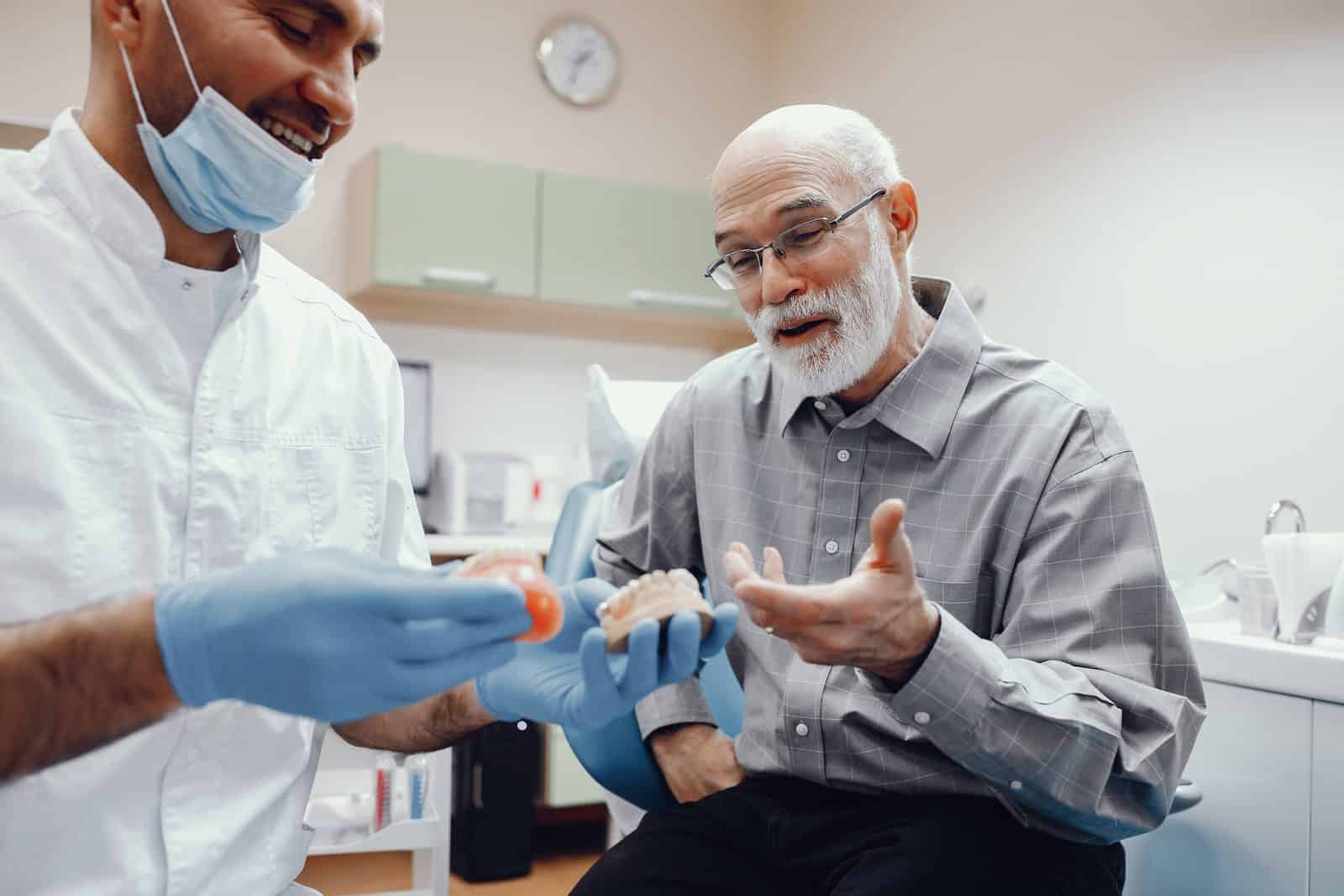
Yes, in most cases you can get dental implants even many years after losing your teeth. The decisive factor is not how much time has passed, but how much bone remains in the upper and lower jaw. With a Cone Beam CT scan (CBCT), the dentist measures bone volume and chooses the most suitable solution: traditional implants, a bone graft before the procedure, or techniques such as All-on-4, specifically designed for patients with limited bone volume.
If you have worn dentures for years or live with gaps in your mouth, this guide explains what happens to the bone over time, how your situation is assessed, and what options are available today.
What happens to the bone when teeth have been missing for years
The tooth root does more than just keep the tooth in place: every time you chew, it transmits stimulation to the bone that keeps it “active.” When the tooth is extracted, that stimulation disappears and the bone gradually begins to resorb.
This process, called bone resorption, is more rapid in the first few months after extraction and then continues gradually over the years. The most common consequences are:
- A thinner, lower bone ridge, meaning less space to place an implant.
- The maxillary sinus moves closer in the back of the upper arch.
- Increasingly unstable dentures, because the supporting base becomes smaller.
- Changes in facial appearance: lips that appear “deflated,” sunken cheeks, and a more aged appearance.
A traditional denture, which rests on the gums, does not stop this process. In some cases, it can even accelerate it, because pressure is distributed unnaturally. This is why many removable denture wearers notice that, year after year, their denture “shifts around” more and needs frequent relining.
The time that has passed is not a limitation: what matters is the available bone
Many patients think they have “missed the boat” because 10, 15 or 20 years have passed since the extraction. In reality, modern implant dentistry has the tools to work even in cases of reduced bone volume.
What the dentist actually evaluates is:
- Bone height and thickness at the sites where the implants would be placed.
- Densità ossea, cioè la qualità dell’osso.
- Position of delicate structures, such as the mandibular nerve and maxillary sinus.
- General health and gum health.
Two people who lost their teeth in the same year may have very different situations. This is why a personalised assessment is always the first step.
How your situation is assessed: Cone Beam CT
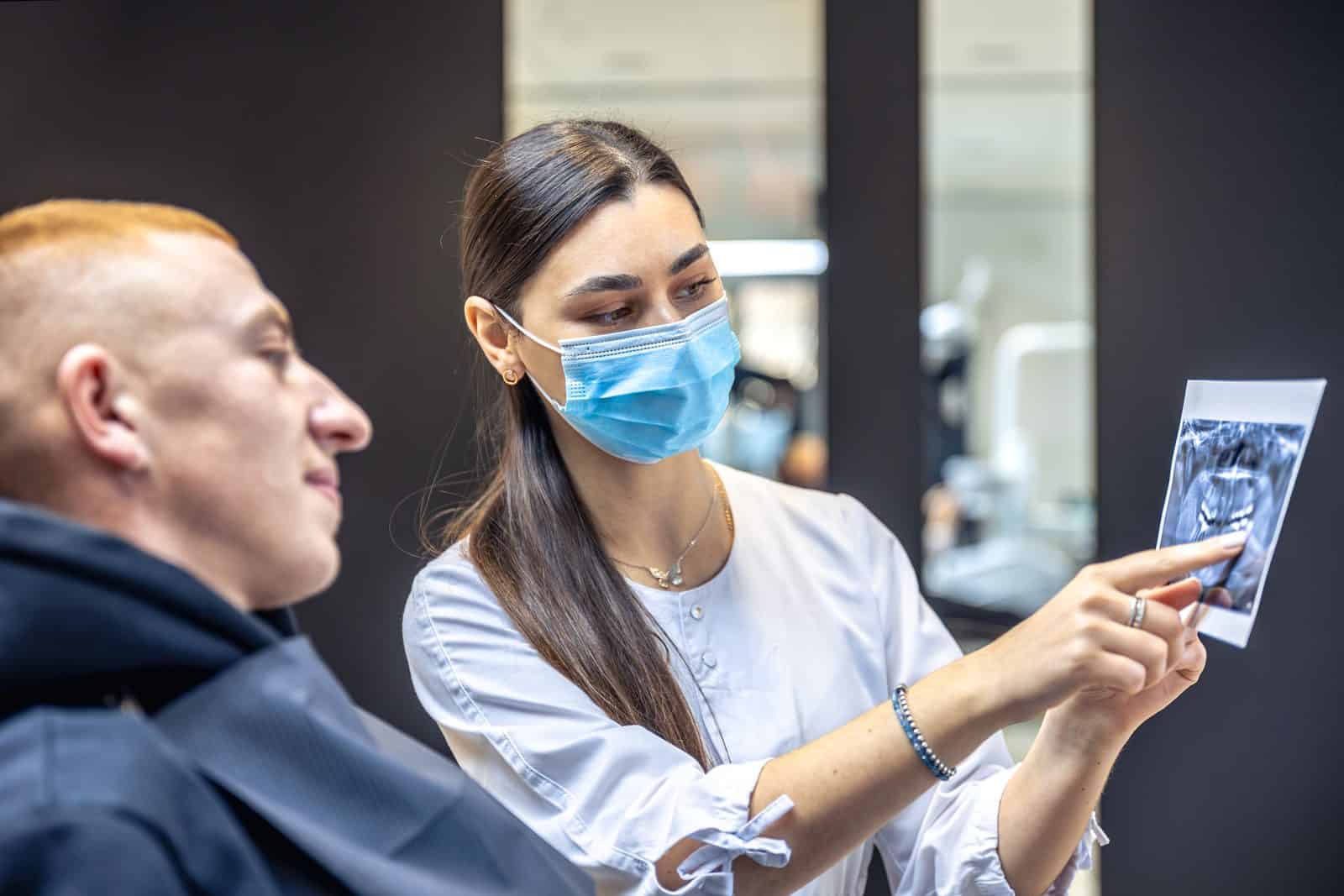
A simple panoramic X-ray (OPT) provides an initial general overview, but planning implants after years of tooth loss requires a CBCT, a low-dose 3D CT scan. This examination shows the bone in three dimensions and makes it possible to:
- accurately measure the available bone volume;
- determine whether grafts are needed or can be avoided by angling the implants differently;
- safely plan the ideal position of each implant.
At Hygeia Dent, CBCT scans are performed directly at the clinic, within Hygeia Hospital in Tirana. You can also send your panoramic X-ray in advance to receive an initial free assessment before you travel.
Possible solutions if you have limited bone
1. Traditional implants (if there is sufficient bone)
Even after many years, some patients retain enough bone for standard implants. In this case, the process is the simplest: implant placement, a healing period, and then the final prosthesis.
2. Bone graft
Quando l’osso è troppo sottile o troppo basso, si può ricostruire con un innesto osseo. Il materiale (di origine sintetica, animale o del paziente stesso) viene posizionato nell’area carente e, con il tempo, si integra e diventa osso nuovo. A seconda del caso l’innesto si esegue prima o insieme all’inserimento degli impianti.
Find out more on our page dedicated tobone grafting.
3. Sinus lift
In the back of the upper arch, after years without teeth, the maxillary sinus tends to drop. The sinus lift (sinus lift) creates the necessary space by adding bone beneath the sinus membrane, allowing stable implants to be placed.
4. All on 4, All on 6 and All on 8: designed for patients with limited bone
For those who have lost all the teeth in an arch, All on X techniques are often the most effective solution. With All on 4, the two posterior implants are placed at an angle: this makes use of the denser bone in the front area and, in many cases, avoids the maxillary sinus and nerve. As a result, many patients with reduced bone can avoid a graft.
Un altro vantaggio importante è il carico immediato: in molti casi ricevi una protesi fissa provvisoria lo stesso giorno o entro 48 ore dall’intervento, senza restare mai senza denti.
Approfondisci con la nostra guida completa ai trattamenti All on X o la pagina sull’All on 4 in Albania.
Have you worn dentures for years? Here’s why implants can change your life
People who switch from dentures to implants often report the same benefits:
- Stabilità: niente più protesi che si muove mentre parli o mangi.
- No more adhesives or creams to secure your dentures.
- More effective chewing, with the ability to enjoy crunchy foods again.
- A clear palate in the upper arch, for a fuller taste experience.
- Greater confidence when smiling and speaking in public.
There is also a less visible but fundamental benefit: implants once again transmit chewing stimulation to the bone, helping to slow bone resorption in the areas where they are placed.
General health: who can receive implants after years without teeth
Age alone is not an obstacle: patients in good health in their 70s or 80s receive implants with excellent results. However, there are certain conditions that the dentist will assess carefully:
- Diabetes: if well controlled, it generally does not prevent implant treatment.
- Fumo: rallenta la guarigione e aumenta il rischio di complicanze; ridurlo o smettere aiuta molto.
- Osteoporosis medications (such as bisphosphonates): should always be reported, as they may require special precautions.
- Active gum disease: must be treated before the procedure.
This is why it is important to share your complete medical history with the team. The fact that Hygeia Dent is located within a hospital provides an additional level of safety, with hospital-grade sterilization protocols and immediate access to advanced medical resources.
How long does the treatment take?
It depends on the solution chosen:
- With traditional implants: implant placement, followed by several months of healing (osseointegration) before the final prosthesis.
- With a bone graft: the treatment timeline may be longer, as the new bone must mature before or alongside implant placement.
- With immediate-load All-on-4: temporary fixed teeth within a few days and the final prosthesis after approximately 3–6 months, once the implants have integrated.
For patients travelling from abroad, treatment is usually organised over two trips: one for the procedure and one for the final prosthesis.
Why choose Hygeia Dent in Albania
If you are considering implants after years without teeth, here is what Hygeia Dent in Tirana offers:
- The only dental clinic located within a hospital, Hygeia Hospital.
- On-site CBCT for an accurate diagnosis from day one.
- Experience with complex cases: All on 4, All on 6, All on 8, bone grafts and immediate loading.
- Free assessment of your panoramic X-ray and a quote within 24 hours.
- Italian-speaking staff and assistance with travel, hotels and transfers.
- Over 3,000 satisfied patients and a 4.7/5 rating on Google.
Scopri tutti i servizi di implantologia in Albania e come funziona il turismo dentale in Albania.
Domande frequenti
After how many years is it no longer possible to get dental implants?
There is no time limit. Even after 20 or 30 years without teeth, with today’s techniques (bone grafts, sinus lifts, All on 4), almost all patients can receive implants.
Will I always need a bone graft?
No. Many patients with reduced bone volume can avoid it thanks to All on 4 or other techniques using tilted implants. Only a CBCT scan can determine this with certainty.
Can I use my denture during treatment?
With immediate loading, you receive a temporary fixed prosthesis straight away. In other cases, the removable denture is adjusted for use during healing.
Do dental implants hurt?
The procedure is performed under local anaesthesia and is painless. Mild swelling or discomfort may occur in the following days and can be managed with the prescribed medication.
Your new smile is still possible
Having lost your teeth many years ago does not mean you have to give up on a fixed, stable smile. The first step is to determine how much bone you have and which solution is best suited to you.
Send your panoramic X-ray to Hygeia Dent and receive a free assessment within 24 hours. Contact us now for your free consultation.