Maxillary bone loss represents one of the most complex challenges in modern dentistry. Many patients who have lost their teeth for years find themselves in the frustrating situation of not being able to receive traditional dental implants due to insufficient bone mass. At Hygieia Dent in Albania, we have developed a wealth of experience in the application of zygomatic implants, an advanced technique that offers new possibilities to those who thought they had no alternative.
Zygomatic implants are not simply a variant of conventional implants. They are a sophisticated surgical solution that completely bypasses the problem of missing jawbone by anchoring directly into the zygomatic bone. This revolutionary technique has transformed the lives of thousands of patients across Europe, restoring their ability to chew, smile and live with confidence.
What Exactly Are Zygomatic Implants
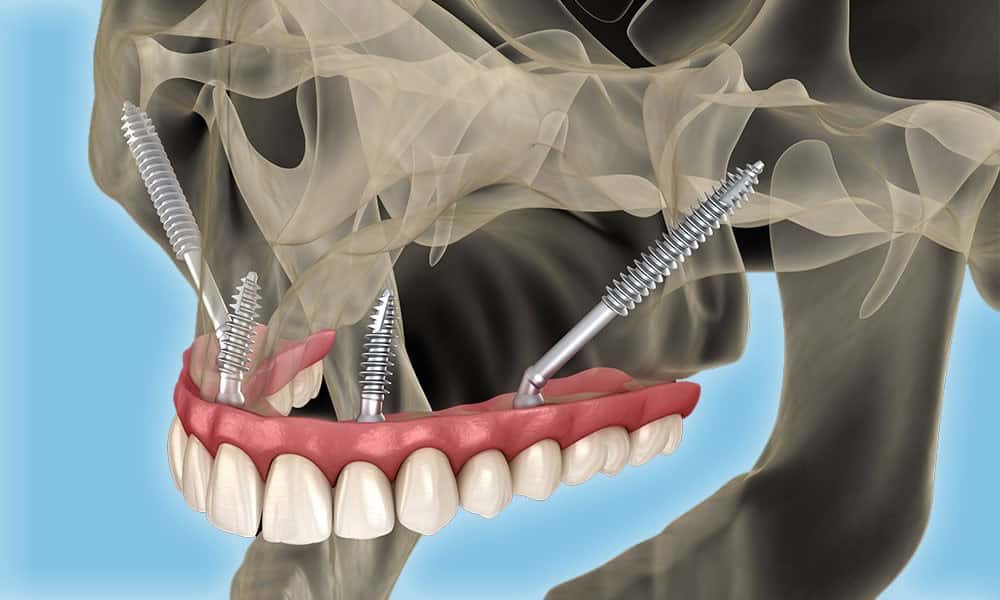
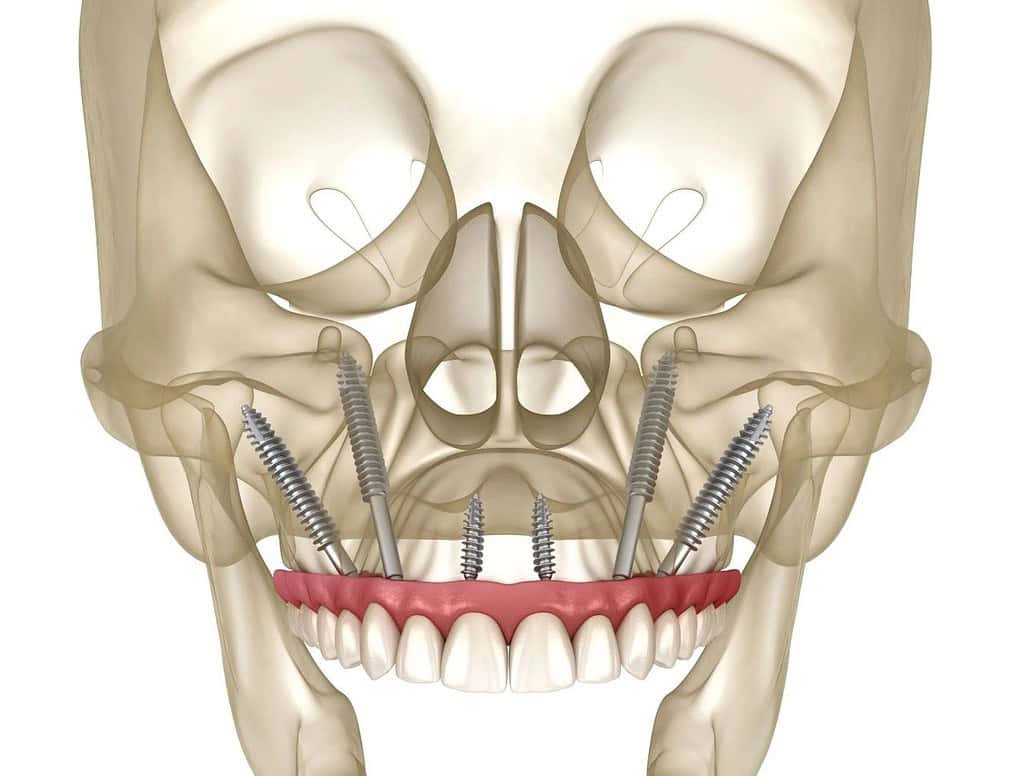
Zygomatic implants are devices made of biocompatible titanium that are significantly longer than standard dental implants. While a traditional implant generally measures between eight and thirteen millimetres, zygomatic implants can be up to fifty millimetres long. This substantial difference in size is not accidental, but reflects their unique function.
The zygomatic bone, commonly known as the cheek bone, is one of the densest and strongest structures in the skull. Unlike the jaw bone, which can deteriorate significantly after tooth loss, the zygomatic bone maintains its density and structural integrity over time. This characteristic makes it ideal as an anchorage point for implants, guaranteeing exceptional stability even in the most complex cases.
The technique was developed in the 1990s by Professor Per-Ingvar Brånemark, the same pioneer who revolutionised modern implant dentistry. Since then, the methodology has been perfected and refined, becoming an international standard for the treatment of severe edentulism associated with severe bone atrophy.
Why Patients Choose Albania for This Treatment
Albania has emerged as a top destination for European dental tourism, attracting patients from Italy, Germany, the UK and other countries. This trend is not the result of chance, but reflects a combination of factors that make our country particularly attractive for complex treatments such as zygomatic implants.
At Hygieia Dent, we combine state-of-the-art technology with internationally certified clinical expertise. Our implant surgeons have completed specialist training at European centres of excellence and keep abreast of the latest innovations in the field. This preparation allows us to tackle even the most complex cases with established protocols and predictable results.
The economic difference compared to Western European countries is undeniable, but it would be reductive to consider only this aspect. We offer a comprehensive experience that includes personalised care in Italian, logistical coordination, and careful follow-up that is not limited to the immediate post-operative phase. Many of our Italian patients particularly appreciate the geographic proximity, which makes both the initial treatment and any follow-ups easy.
Who are the Ideal Candidates for Zygomatic Implants
Not all patients with bone loss need zygomatic implants. This solution is specifically indicated for special situations that require an alternative approach to conventional implantology.
Ideal candidates typically have severe atrophy of the upper jaw bone, a condition that develops gradually in the years following tooth loss. When teeth are lost, the underlying bone no longer receives the mechanical stimulation of chewing and a process of progressive resorption begins. After ten to fifteen years of edentulism, many patients find themselves with an alveolar ridge so reduced that it cannot support traditional implants.
Patients who have already failed attempts at bone grafting or regeneration represent another significant group. Bone grafts, although effective in many situations, do not always produce satisfactory results, especially in cases of extreme atrophy. For these patients, zygomatic implants offer an alternative route that avoids further bone reconstruction procedures.
Those suffering from diseases that compromise bone regeneration, such as uncontrolled diabetes or certain autoimmune conditions, may also benefit from this technique. Anchoring to the zygomatic bone, which is structurally different from the alveolar bone, may offer a better chance of success in these complex clinical contexts.
The Diagnostic Process at Hygieia Dent
Before proceeding with any surgery, we conduct a thorough diagnostic assessment that goes far beyond a simple visual examination. We understand that each patient has a unique anatomical situation, and this requires a detailed and customised analysis.
Cone beam computed tomography represents the fundamental diagnostic tool for planning zygomatic implant surgery. This technology provides us with extremely high-resolution three-dimensional images of craniofacial structures, allowing us to assess bone density, the anatomy of the maxillary sinuses, and the course of neurovascular structures with millimetric precision. At our clinic we use state-of-the-art equipment that minimises radiological exposure while maintaining excellent diagnostic quality.
The CT data are then processed with advanced surgical planning software. These digital tools allow us to virtually simulate the surgery, determining the optimal angle of the implants, their precise length, and the ideal position in relation to the surrounding anatomical structures. This digital planning phase has revolutionised zygomatic implantology, significantly increasing the predictability of results and reducing margins of error.
During the initial consultation, we discuss in depth with the patient the expectations, the available treatment options, and the proposed treatment plan. We believe it is essential that each patient fully understands the path he or she is about to take, including the expected benefits and potential risks. This transparent communication forms the basis of a relationship of trust that will accompany the entire course of treatment.

The Surgical Procedure: What to Expect
The operation to place zygomatic implants is a major surgical procedure requiring advanced specialist skills. It is performed in a fully equipped operating theatre, under conditions of absolute sterility, and generally under conscious sedation or general anaesthesia, depending on clinical need and patient preference.
The surgical technique involves insertion of the implants through the residual alveolar ridge, with progression through the maxillary sinus to anchorage in the zygomatic bone. The implant path is carefully guided by preoperative planning, and in many cases we use customised surgical guides that translate digital planning into surgical precision.
Typically, zygomatic implants are combined with conventional implants in anterior regions where residual bone is often sufficient. This hybrid configuration allows for optimal distribution of chewing forces and superior prosthetic stability. The total number of implants varies depending on the individual anatomical situation, but a common configuration involves two posterior zygomatic implants and two to four conventional anterior implants.
The duration of the procedure generally varies between two and four hours, depending on the complexity of the case. At the end of the surgical procedure, in most cases we immediately proceed with implant loading, applying a fixed provisional prosthesis. This immediate loading approach is one of the great advantages of the zygomatic technique: the patient leaves the clinic with functional fixed teeth as early as the day of surgery.
The Immediate Loading Protocol
The concept of immediate loading has revolutionised the patient experience in modern implantology. Whereas with traditional implants it was often necessary to wait months before receiving a definitive prosthesis, with zygomatic implants we can frequently provide fixed teeth from day one.
This possibility stems from the exceptional primary stability that zygomatic implants achieve in dense zygomatic bone. The initial stability is so high that moderate masticatory forces can be applied immediately, allowing the patient to quickly return to a normal life.
The provisional prosthesis that we fit on the day of surgery is made of reinforced acrylic, designed to be functional and aesthetically pleasing. Although called “provisional”, this prosthesis will accompany the patient for several months during the osseointegration phase, the biological process by which the bone bonds intimately to the surface of the titanium implant.
During this healing period, which generally lasts four to six months, we carefully monitor progress through clinical and radiographic checks. Once osseointegration is complete and soft tissue healing has stabilised, we proceed with the fabrication of the final prosthesis, typically in all-ceramic or zirconia, materials that offer excellent long-term aesthetic and functional characteristics.
Comparison of Different Rehabilitation Options
For patients with severe maxillary bone loss, there are several treatment alternatives besides zygomatic implants. Understanding the differences between these options helps to make informed decisions.
| Feature | Zygomatic implants | Bone Grafting + Implants | Removable prosthesis | All-on-4 Traditional |
| Treatment duration | Single surgical phase | 12-18 months (several stages) | Immediate | Single surgical phase |
| Number of interventions | One | Two or more | None | One |
| Stability | Excellent | Good (if graft is successful) | Limited | Good-Excellent |
| Duration of results | Long-term (20+ years) | Long-term | 5-7 years | Long-term (15+ years) |
| Applicability with severe atrophy | High | Variable | High | Low |
| Chewing comfort | Excellent | Excellent | Moderate | Excellent |
| Maintenance required | Minimum | Minimum | Significant daily | Minimum |
This table shows that zygomatic implants are often the optimal solution for patients with severe atrophy who wish to avoid multiple surgeries and achieve immediate and lasting results.
Bone grafts, although effective in many situations, take a long time, involve multiple surgical procedures, and have variable failure rates, especially in cases of extreme atrophy. When the graft fails to take root, the patient finds himself having invested time and resources without achieving the desired result.
Although traditional removable prostheses represent the least invasive solution, they entail significant functional and aesthetic limitations. Reduced stability, discomfort in daily use, and the continuous progression of underlying bone resorption make this option less and less acceptable for patients seeking an optimal quality of life.
The conventional All-on-4 technique is an excellent alternative for many patients, but still requires a minimum amount of residual bone that is not always present in cases of severe atrophy. Zygomatic implants essentially extend the principles of All-on-4 to the most extreme cases where the jaw bone is virtually absent.
The Post-Operative Period and Healing
We understand that many patients have concerns about the recovery period after such a significant operation. Post-operative management is an integral part of successful treatment, and at Hygieia Dent we follow established protocols to maximise patient comfort during recovery.
The first few days after surgery typically involve facial swelling and bruising, completely normal phenomena that reflect the body's physiological inflammatory response. We provide precise guidelines for managing these symptoms, including the application of cold compresses in the first forty-eight hours and pharmacological protocols that effectively control pain and inflammation.
Most patients describe post-operative discomfort as manageable and significantly lower than their expectations. Modern analgesic protocols allow optimal pain control, and many patients report only needing painkillers for the first three or four days.
As far as nutrition is concerned, in the first few weeks we recommend a soft diet that avoids excessive stress on the temporary prosthesis. Gradually, as healing progresses, the patient can reintroduce foods of normal consistency. It is important to note that already after a few weeks most patients can chew normally, an extraordinary result considering the starting condition.
We schedule regular check-ups during the first few months to monitor healing and ensure that everything is progressing as expected. These appointments allow us to identify any problems at an early stage and intervene promptly if necessary. Constant communication with our Italian patients also takes place remotely, through teleconsultations that allow us to provide support without the need for frequent travel.
Success Rates and Long-Term Prospects
International scientific literature documents success rates of zygomatic implants of over ninety-five per cent at ten years. These data, confirmed by our clinical experience, place this technique among the most reliable implant solutions available.
Long-term success depends on many factors, including proper surgical planning, the operator's experience, the patient's bone quality, and above all the maintenance of proper oral hygiene. Although implants are made of titanium and therefore immune to caries, they require healthy peri-implant tissues to maintain their stability over time.
Peri-implantitis, an inflammation of the tissues surrounding the implant similar to periodontitis affecting natural teeth, is the main long-term complication of modern implantology. Prevention of this condition involves meticulous oral hygiene and regular professional check-ups. At Hygieia Dent, we educate each patient in proper home hygiene manoeuvres and schedule regular professional hygiene sessions.
Patients who follow our recommendations and maintain an unwavering commitment to their implant prosthetics can expect their investment to last for decades. Many of our patients treated years ago continue to enjoy excellent results, with functional and aesthetically intact prostheses that have permanently transformed their quality of life.

Why Choose Hygieia Dent for Your Treatment
The choice of clinic for a complex procedure such as the placement of zygomatic implants should not be taken lightly. Several factors distinguish Hygieia Dent in the landscape of Albanian and international dentistry.
Our surgical team has successfully treated hundreds of zygomatic implant cases, accumulating experience that results in predictable results and minimised complications. All our specialists maintain affiliations with international scientific societies and regularly attend congresses and refresher courses at leading European centres.
The technology in our facility reflects the highest standards of contemporary dentistry. From the diagnostic equipment to the operating theatre, every element has been selected to ensure safety, precision and comfort. We use implants from the world's leading manufacturers, with extensive scientific documentation attesting to their long-term reliability.
The care of international patients is a priority for us. Our staff includes coordinators who speak fluent Italian and follow each patient from the initial telephone contact to post-treatment follow-ups. We take care of every logistical aspect, from airport transfers to hotel recommendations, allowing the patient to focus exclusively on his or her treatment.
Economic transparency is another hallmark of our approach. We provide detailed quotes that include all costs associated with the treatment, with no surprises or hidden fees. We understand that many Italian patients have had negative experiences with less-than-serious clinics, which is why we place special emphasis on clear communication and building a lasting relationship of trust.
The Experience of Italian Patients at Our Clinic
Our Italian patients represent a significant portion of our business, and many of them come to us by word of mouth, the most authentic form of recommendation. Their testimonials highlight some recurring aspects that define the experience at Hygieia Dent.
The professionalism of the clinical team is constantly mentioned as a reassuring element. Many patients understandably arrive anxious, having perhaps had disappointing experiences in the past or facing a procedure that they perceive as significant. The competence demonstrated by our specialists, combined with an empathetic and communicative approach, helps to transform initial anxiety into confidence.
The absence of language barriers is particularly appreciated. Being able to communicate in Italian during all stages of treatment, from the anamnesis to post-operative instructions, eliminates a potential source of stress and misunderstandings. This seemingly obvious aspect makes a substantial difference to the overall patient experience.
The quality-price ratio is obviously an important element in the decision of many patients to choose Albania. However, what pleasantly surprises many of our Italian patients is that they have not had to compromise on quality in order to obtain economic benefits. The combination of clinical excellence and affordable costs is what makes dental tourism in Albania not simply an economic necessity, but an intelligent and conscious choice.

Frequently Asked Questions about Zygomatic Implants
How long does the zygomatic implant placement procedure take?
The surgical procedure generally takes between two and four hours, depending on the complexity of the specific case and the total number of implants to be placed. This time includes both the placement of the zygomatic implants and any conventional anterior implants and the application of the immediately loaded provisional prosthesis.
Can I really have fixed teeth on the day of surgery?
Yes, in most cases we apply a fixed provisional prosthesis immediately after implant placement. This prosthesis is fully functional and allows the patient to chew soft food already from the first days. This represents one of the main advantages of the zygomatic technique over other implant procedures.
Are zygomatic implants painful?
Post-operative discomfort is subjective and varies from patient to patient, but most report that it was less than expected. We use modern pharmacological protocols that effectively control pain and inflammation. Facial swelling is normal in the first few days but gradually resolves within one to two weeks.
How long do I have to stay in Albania for the treatment?
We typically recommend a stay of seven to ten days for the entire initial course of treatment. This includes the final pre-operative consultation, surgery, and a few days of post-operative monitoring. Subsequent follow-ups can be managed through teleconsultations or during short scheduled visits in the following months.
Can zygomatic implants fail?
Like any medical procedure, zygomatic implants present a risk of failure, albeit statistically small. The success rates documented in the scientific literature exceed ninety-five per cent in the long term. Failure, when it occurs, is more frequent in the early phase and is generally manageable with implant repositioning.
What type of anaesthesia is used?
The procedure can be performed under conscious sedation or general anaesthesia, depending on the complexity of the case and the patient's preference. Conscious sedation keeps the patient relaxed and anxiety-free while remaining able to respond to stimuli, while general anaesthesia induces a state of complete sleep. Both options are safe and are managed by specialised anaesthetists.
Can I smoke after surgery?
Smoking is a significant risk factor for long-term implant success. We strongly recommend complete cessation of smoking for at least the first few weeks after surgery, and ideally permanently. Smoking impairs tissue healing and increases the risk of both immediate and late complications.
How does oral hygiene work with zygomatic implants?
Home hygiene of zygomatic implants is similar to that of natural teeth, with special attention paid to implant emergence areas. We provide detailed instructions on brushing techniques and the use of auxiliary devices such as hydro-pulsators and interproximal brushes. Regular professional hygiene sessions are an integral part of long-term maintenance.
Will I feel the implants as a “foreign body”?
No, after the initial adaptation period, most patients do not perceive any difference to their natural teeth. Fixed dentures supported by zygomatic implants become an integral part of the mouth, allowing one to speak, chew and smile naturally and without being aware of their presence.