Osseointegration is the biological process through which the jawbone bonds firmly to the surface of the titanium dental implant. It is the phase that determines the long-term success of any implantology: without proper integration, the implant is unable to withstand chewing forces.
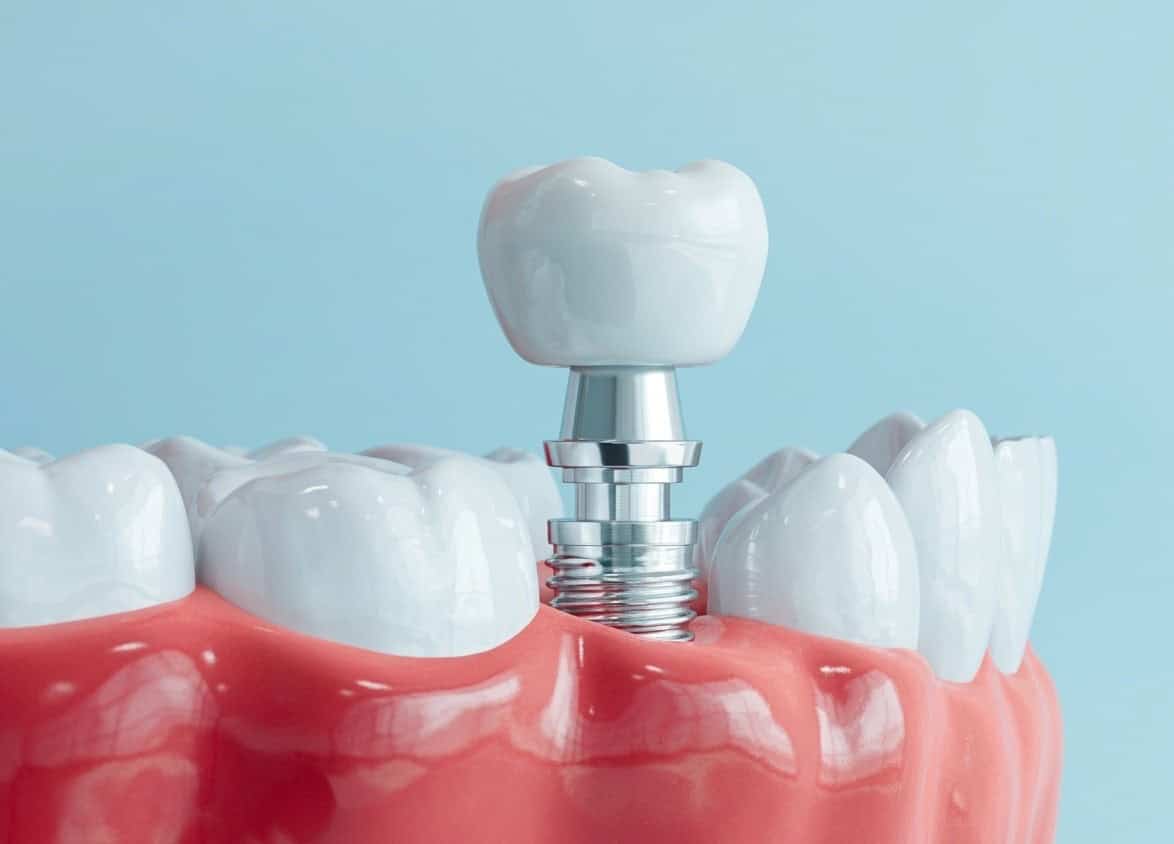
Many patients know the dental implant as a “titanium screw,” but few realize that the real key to treatment is not the screw itself, but rather the biological response of the surrounding bone. It is precisely this response that transforms an artificial device into a functional structure capable of lasting for many years. Understanding how osseointegration takes place helps explain why healing times cannot be shortened beyond a certain limit and why following post-operative instructions is so important.
In this guide, we look at what happens during osseointegration, how long it takes, which factors promote it, and which may hinder it.
What Is Osseointegration
The term refers to the direct, structural, and functional contact between living bone and the surface of thedental implant. When the implant is placed, bone cells gradually begin to deposit on its surface until they anchor it firmly in place.
The concept was first described in the middle of the last century, when it was observed that titanium, unlike other materials, was accepted by the body without forming rejection tissue: the bone grew in direct contact with the metal. This discovery made modern implant dentistry possible. Today, implant surfaces are treated and microstructured specifically to promote the adhesion of bone cells and reduce integration time.
This bond transforms the implant into an artificial root capable of supporting a crown, a bridge, or a full prosthesis. Unlike a tooth supported only by soft tissue, an osseointegrated implant distributes chewing forces directly to the bone, in a way similar to a natural root.
Why Osseointegration Is So Important
An implant that does not integrate properly is unable to support the load and must be removed. By contrast, a well-integrated implant can remain stable for decades. The difference between these two outcomes is determined largely in the weeks following surgery, when the bone is still “deciding” how to respond to the presence of the implant.
For this reason, the healing phase is not simply a waiting period, but an active part of the treatment. Every patient behavior — from oral hygiene to diet, from smoking to rest — can affect the outcome.
The Stages of Osseointegration
1. Initial healing (first 1–2 weeks) Immediately after placement, a blood clot forms around the implant and the tissue healing response begins. At this stage, stability depends on the mechanical anchorage achieved during the procedure, that is, how firmly the implant was fixed into the bone at the time of placement. This is the period when the soft tissues begin to close and protect the area.
2. Bone remodeling (2–6 weeks) The bone around the implant is partially resorbed and replaced by new tissue. This is the most delicate period, during which stability may temporarily decrease: the initial mechanical anchorage diminishes while biological stability is not yet complete. This phase, sometimes called the “stability dip,” explains why applying an excessive load too early can be risky.
3. Complete integration (from 6 weeks to several months) The new bone matures and surrounds the surface of the implant. Biological stability progressively increases until it surpasses the initial mechanical stability. At the end of this phase, the implant reaches the stability needed to receive the final tooth.
In general, osseointegration takes from 6 weeks to 3–6 months, depending on bone density, the area treated, and the patient’s condition. In the mandible, where the bone is generally denser, healing times tend to be shorter than in the upper arch.

Osseointegration in the upper and lower arches
Not all areas of the mouth respond in the same way. The bone of the mandible (lower arch) is typically more compact and provides stronger initial anchorage, often with faster healing times. The bone of the upper jaw is generally more porous and, especially in the posterior area near the maxillary sinuses, may require longer healing times or additional procedures.
This difference is one of the reasons why treatment planning is always personalized: the same person may have different integration times between one arch and the other.
Factors that promote osseointegration
- Good bone quality and quantity. When there is insufficient bone, a bone graft may be necessary before or during implant placement to create an adequate foundation.
- Thorough oral hygiene, to prevent infections of the tissues around the implant during the healing phase.
- No smoking, since smoking reduces blood supply and slows healing.
- Management of systemic conditions such as uncontrolled diabetes, which can interfere with the healing processes.
- Balanced nutrition, which provides the nutrients needed for tissue regeneration.
- Following post-operative instructions provided by the clinic, including any prescribed drug therapies.
What can hinder integration
Excessive or premature loading of the implant, infections, poor hygiene, smoking, and insufficient bone density are the most common causes of failed integration. Bruxism (nighttime teeth grinding) can also place excessive forces on implants during healing, which is why nighttime protection is recommended in some cases.
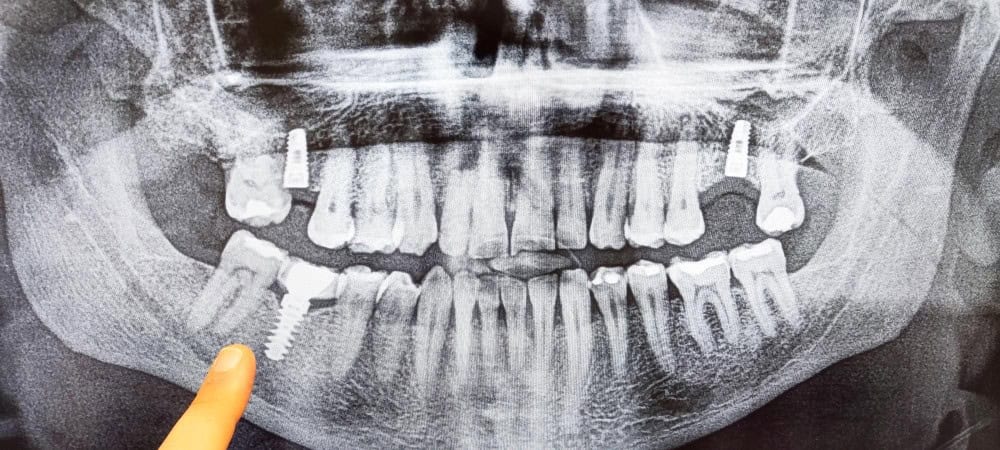
In most cases, an accurate diagnosis and personalized treatment planning significantly reduce these risks. The preliminary assessment of the X-ray and the bone is specifically intended to identify any potential issues in advance and tailor the treatment accordingly.
In patients with adequate bone, some solutions such asimmediate-load implantology make it possible to place temporary teeth during the same stage, while still maintaining the conditions necessary for integration. It should be emphasized that immediate loading does not bypass the osseointegration phase: the temporary teeth are designed not to interfere with the healing of the underlying bone.
Osseointegration and full-arch rehabilitations
In rehabilitations on multiple implants, such as All-on-4, All-on-6 and All-on-8, the osseointegration of the various implants must proceed uniformly. The number and position of the implants are planned to distribute the load evenly and to provide the support needed for the final prosthesis.
In these cases, the provisional phase and scheduled follow-up visits play a particularly important role in monitoring healing. A well-balanced temporary prosthesis protects the implants during the most delicate phase and lays the groundwork for the final rehabilitation.
The role of diagnostics and planning
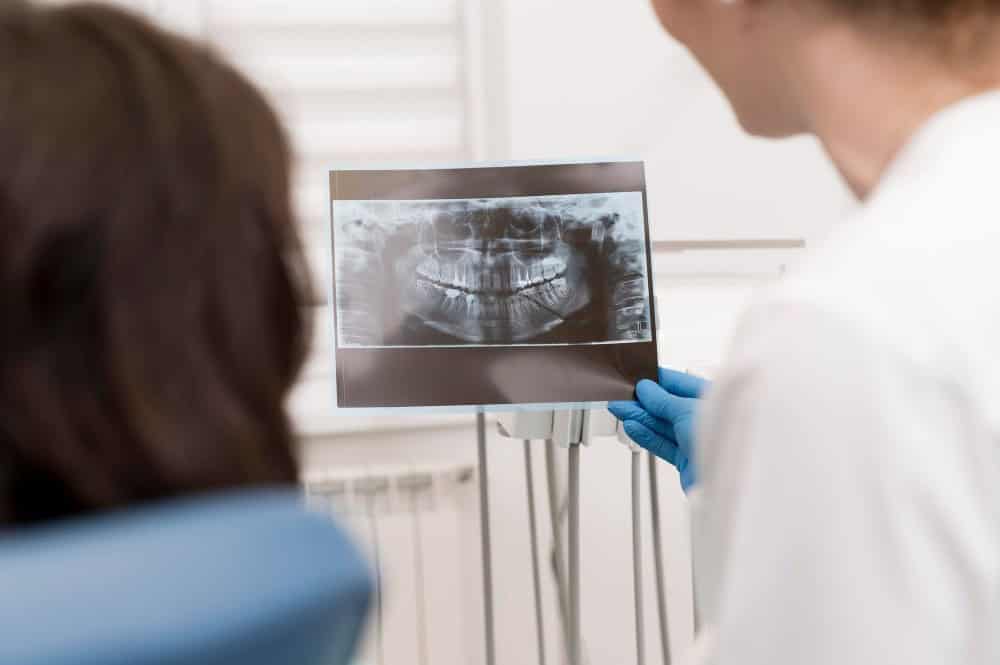
Successful osseointegration begins long before the procedure. Assessing bone density, analyzing the panoramic X-ray, and, when necessary, performing 3D imaging make it possible to choose the type of implant, its length, and its diameter, as well as determine whether a bone graft is advisable. Careful planning reduces the margin for unforeseen issues and promotes smooth healing.
Dental implants in Albania at Hygeia Dent
At Hygeia Dent, planning for osseointegration begins with the evaluation of the panoramic X-ray and bone density. Based on this information, the healing time, any possible need for a bone graft, and the most appropriate time to place the final restoration are determined.
The goal is not simply to place the implant, but to guide the entire integration process with follow-up checks and clear instructions, so that the result remains stable and long-lasting over time. Interested patients can send their panoramic X-ray in advance to receive an initial assessment and understand what stages their specific case would involve. Those arriving from abroad can also organize the different phases thanks to the Dental tourism in Albania.
Frequently asked questions
How long does osseointegration of a dental implant take?
Generally from 6 weeks to 3-6 months, depending on bone density, the implant site, and the patient's overall condition. In the mandible, healing times tend to be shorter than in the upper arch.
How can I tell whether the implant has integrated properly?
Integration is verified by the dentist through clinical check-ups and, when necessary, radiographic examinations. An integrated implant is stable, does not move, and does not cause pain.
Does smoking affect osseointegration?
Yes. Smoking reduces blood supply to the tissues and can slow healing, increasing the risk of failed integration. Reducing or stopping smoking during the perioperative period is strongly recommended.
What happens if the implant does not integrate?
If integration fails, the implant is removed and, after a healing period, it is generally possible to proceed with a new placement, potentially preceded by a bone graft.
Can I eat normally during osseointegration?
Soft foods are recommended in the first few days; afterwards, your normal diet is resumed gradually according to the clinic’s instructions, avoiding overloading the treated area.
Is osseointegration painful?
The process itself is not painful. Mild discomfort is normal in the days following the procedure and tends to decrease progressively.