It is probably the first question that comes to mind: “Will it hurt?”. Fear of pain is one of the main reasons why many people put off implantology, even when they would need it. The honest answer is this: during the surgery you will feel no pain, because it is performed under local anaesthesia. After the operation you may experience discomfort or swelling for a few days, but in most cases this is manageable with prescribed therapy and correct indications. If you want to understand in general how the procedure works, you can also read our page on dental implants in Albania.
What happens during surgery: will I feel anything?
The implant insertion takes place under local anaesthesia, just like normal dental treatment. The area is completely desensitised. You may feel pressure or vibration, but no pain.
The procedure itself is often quicker than many imagine. In simple cases, the placement of a single implant can take less than an hour.
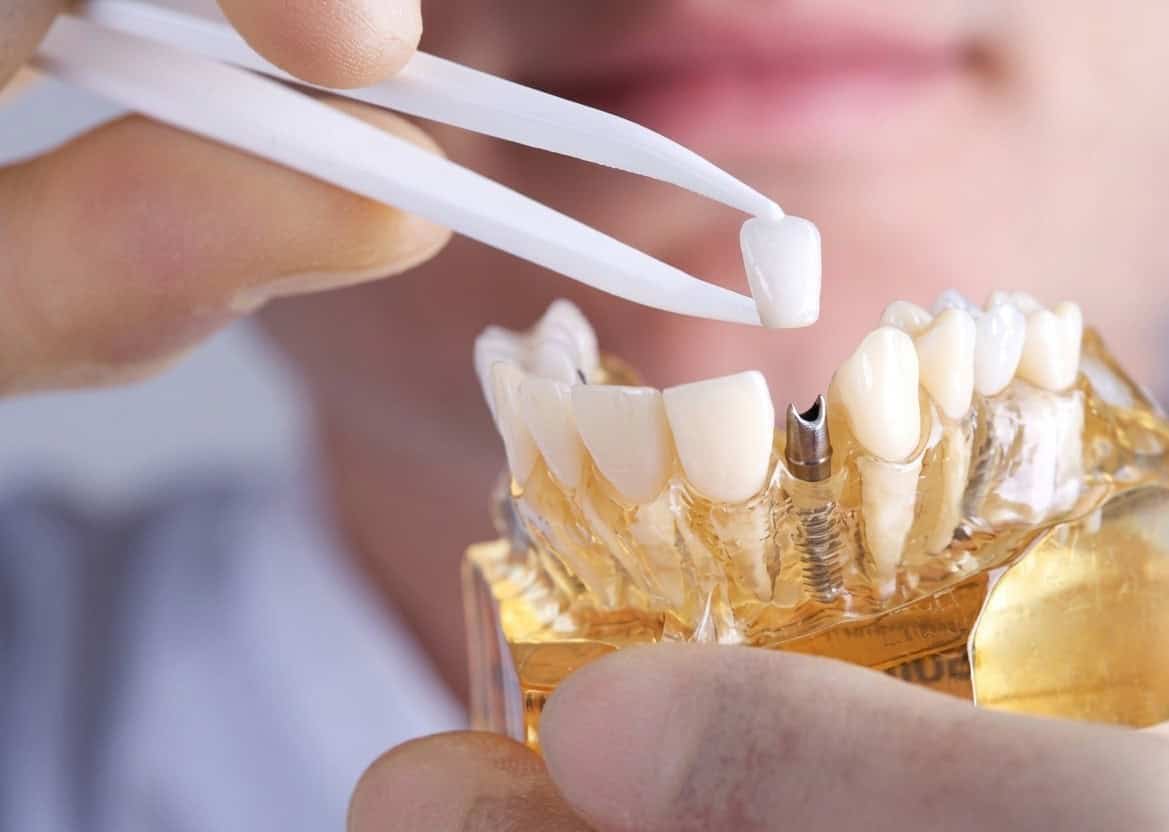
If you are interested in understanding the technical structure of the system and how it is positioned, you will find more details in the article on what a dental implant looks like.
Pain after surgery: how long does it really last?
After the anaesthesia wears off, it is normal to experience slight pain or a feeling of pressure in the treated area. In most cases, discomfort peaks in the first 24-48 hours.
Swelling may appear the next day and gradually decrease over the following days. With anti-inflammatory drugs and antibiotics prescribed by the doctor, recovery is generally easy.
Many patients tell us that the experience was less painful than they expected.
To find out what happens in the early stages, you can also read our article 72 hours after dental implants in Albania.
Factors influencing the level of pain
Not all cases are the same. Post-operative pain depends on several factors.
The first is the complexity of the procedure. A single implant in the presence of sufficient bone is generally simpler than a complete rehabilitation or a case with bone regeneration.
The second factor is the individual response. Some people have a lower pain threshold, others recover very quickly.
The third element is compliance with post-operative instructions. Following instructions significantly reduces discomfort and complications.
If the surgery involves additional procedures such as bone regeneration, you can learn more by reading our page on bone grafting.
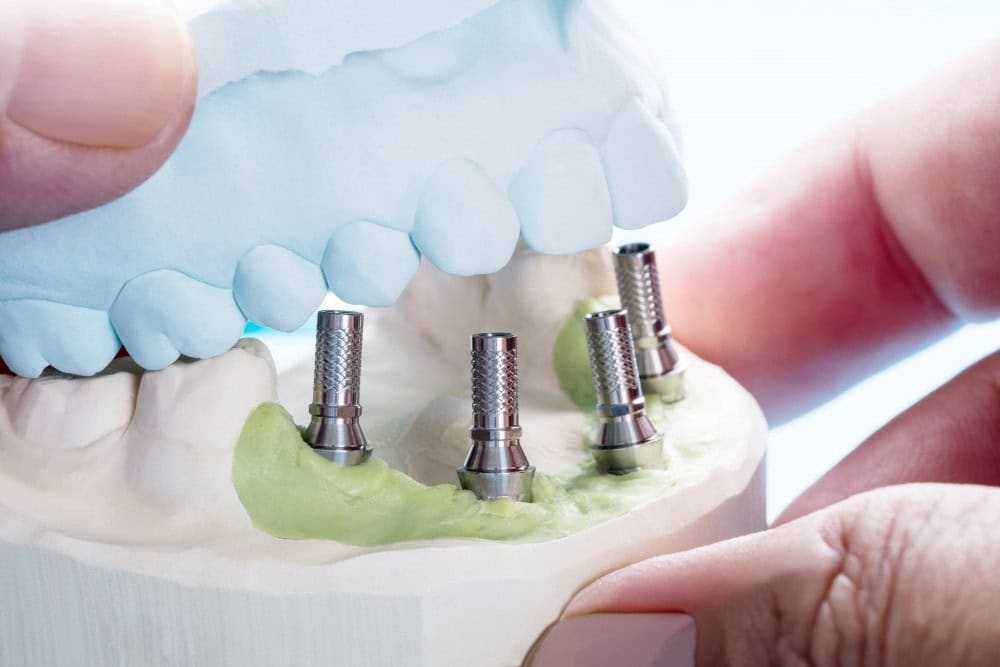
What about multiple implants or All-on-4?
When placing multiple implants or performing a complete rehabilitation such as All-on-4, swelling may be slightly more pronounced, but the pain remains generally controllable.
Planning is crucial in these cases. A precise protocol reduces surgical trauma and promotes faster healing.
Immediate loading: does it hurt more to have fixed teeth immediately?
Many patients ask whether having a fixed tooth immediately means more pain. In reality, immediate loading does not automatically increase discomfort.
If the case is suitable and the implant has adequate primary stability, the provisional prosthesis is placed carefully so as not to overload the area.
You can learn more about this topic by reading: “One-day implants in Albania: is it possible?“
How long does it take to return to normal?
Most patients resume light activities as early as the next day. It is advisable to avoid intense exertion for a few days.
The process of osseointegration, i.e. the joining of implant and bone, takes longer, but does not involve constant pain. It is a silent biological process.
If you want to know in detail what to expect in the healing phase, you can read Recovery after dental implantology: a complete guide.
Nutrition after surgery: what to eat to avoid pain
Proper nutrition in the first few days helps reduce discomfort. It is preferable to choose foods that are soft, not too hot and easy to chew.
Avoiding hard or crunchy foods in the treated area helps to protect healing.
Find detailed advice in the article What to eat after a dental implant.
Is an implant more painful than an extraction?
Many patients who have already undergone tooth extraction report that the implantation was less traumatic than they imagined.
The operation is precisely planned and takes place under controlled conditions. Often the discomfort is comparable to, or even less than, that of a complex extraction.
Does dental tourism change anything in recovery?
No, the biological recovery is the same. What changes is the organisation. For international patients, we plan visits in a way that optimises time without compromising safety.
If you are considering coming to Albania for treatment, you can read on: is dental tourism in Albania safe?.

When to worry?
Mild pain, swelling or small bruises are normal. If, however, uncontrollable intense pain, fever or persistent bleeding appears, it is important to contact the clinic immediately.
Monitoring and controls are part of the journey. You are never left alone in the post-operative period.
Are the implants worth the initial inconvenience?
The final question is this: is it worth a few days of discomfort for a long-term stable solution?
Many patients say yes. The implant offers stability, natural aesthetics and improved quality of life.
Conclusion: manageable pain, lasting benefits
Dental implants are not “sensation-free” operations, but neither are they unbearable procedures. With adequate anaesthesia, proper planning and post-operative instructions, pain is generally mild and temporary.
If you want a personalised evaluation or have specific concerns, contact us and tell us about your case. We will explain in detail what to expect, with transparency and clarity.