When a tooth is missing, the two most common solutions are a single implant and a dental bridge. Both restore chewing function and aesthetics, but with very different approaches. The choice depends on the condition of the neighboring teeth, the amount of available bone, aesthetic needs, and the patient’s long-term goals.
Replacing a missing tooth is not just a matter of aesthetics. Over time, an empty space can lead to shifting of the adjacent teeth, tilting of the neighboring teeth into the gap, and bone loss in the edentulous area. Appropriate treatment helps preserve the balance of the entire dental arch. Let’s therefore look at the differences between the two options so you can make a more informed decision, bearing in mind that the final assessment always rests with the doctor after a clinical examination.

What happens when a tooth is missing
The loss of a tooth does not concern only the visible gap. The root of a natural tooth transmits continuous stimulation to the bone during chewing; when the root is no longer present, that stimulation stops and the bone in the area gradually tends to resorb. In addition, neighboring teeth may begin to tilt toward the empty space, and the opposing tooth in the opposite arch may over-erupt. If not managed, these movements make future solutions more complicated. That is why the choice of replacement should be made with not only the present in mind, but also how the situation will evolve over time.
How a single implant works
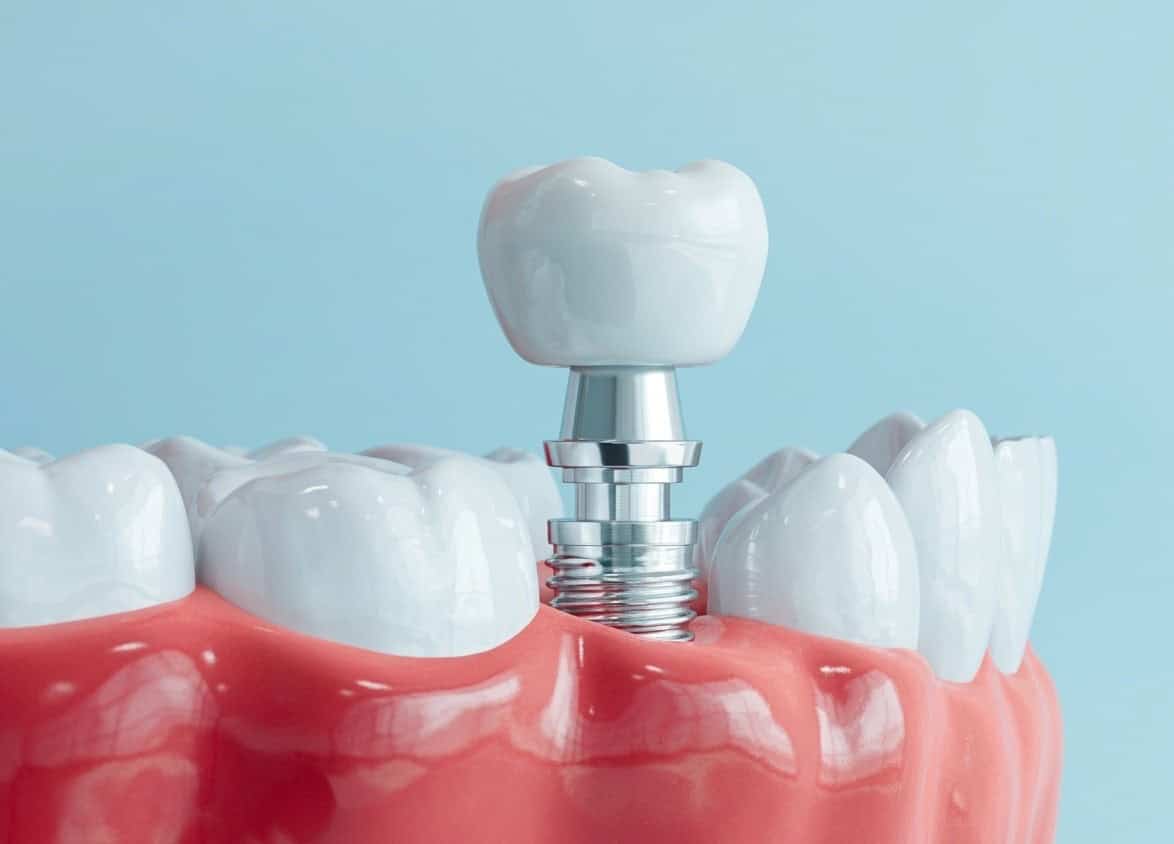
Thedental implant A single implant replaces both the root and the crown of the missing tooth. A titanium screw is inserted into the bone and, after the osseointegration period, a custom-made crown is placed to reproduce the shape and color of the natural tooth.
The major advantage is that it does not involve the adjacent teeth, which remain intact. In addition, by replacing the root, the implant continues to transmit stimulation to the bone, helping preserve it over time. It is a self-contained solution that does not depend on the condition of the neighboring teeth.
How a dental bridge works
Today dental bridges replaces the missing tooth by relying on the two adjacent teeth, which are filed down to support the crowns anchoring crowns. The missing tooth is represented by an intermediate element suspended between the two abutments. It is a faster solution and does not require implant surgery.
The main disadvantage is that it involves reducing healthy adjacent teeth, which then become permanently involved in the restoration. In addition, because the bridge does not replace the root, the bone in the area of the missing tooth does not receive stimulation and may resorb over time.

Comparison between the two solutions
Preservation of adjacent teeth Implant: preserves them completely. Bridge: requires filing down the adjacent teeth to place the supporting crowns.
Bone health Implant: stimulates the bone and helps prevent bone resorption. Bridge: does not transmit stimulation to the bone in the area of the missing tooth, which may diminish over time.
Duration Implant: can last many years with proper maintenance. Bridge: generally has a shorter lifespan and may require replacement over time.
Long-term aesthetics Implant: better maintains the gum and bone profile. Bridge: bone resorption beneath the pontic can, over time, create small visible gaps.
Treatment times Implant: takes longer due to osseointegration, which requires several weeks or months. Bridge: faster, with fewer appointments.
Hygiene Implant: cleaned like a natural tooth, with a toothbrush and floss. Bridge: requires cleaning under the pontic with dedicated tools.
Requirements Implant: requires sufficient bone, which can be supplemented with a bone graft. Bridge: requires healthy, strong adjacent teeth to serve as abutments.
When an implant is the preferred option
A single implant is often the recommended choice when the adjacent teeth are healthy and no treatment of them is desired, when the goal is to preserve the bone over the long term, when there is adequate bone available or it can be restored, and when a stable, long-lasting solution is sought that does not involve other teeth.
It is also a solution appreciated by those who prefer a restoration that behaves as much as possible like a natural tooth, both in function and in daily hygiene.
When a bridge may be indicated
A bridge may be considered when the adjacent teeth already have extensive restorations or crowns (and would therefore be treated anyway), when surgery is not possible or not indicated, when the available bone is insufficient and a graft is preferably avoided, or when a solution with shorter treatment times is sought.
In some clinical situations, a bridge remains a valid and functional choice: what matters is that it be recommended only after a complete evaluation of the alternatives.
What if more than one tooth is missing?
When more than one tooth is missing, the comparison broadens. In the presence of multiple missing teeth, implant-supported bridges can be considered or, in cases of severely compromised arches, full-arch restorations such as All-on-4 or All-on-6, which replace an entire arch on a defined number of implants. The solution depends on the number and position of the missing teeth and on the condition of the bone.
The cost factor
From a financial standpoint, a traditional bridge often has a lower initial cost than an implant. However, the comparison should be made over the long term: an implant tends to last longer and does not involve the adjacent teeth, which, with a bridge, may in turn require future treatment. Evaluating the relationship between the initial cost and long-term durability helps you make a more informed choice. A personalized quote makes it possible to compare the options in concrete terms.
Implants and bridges in Albania at Hygeia Dent
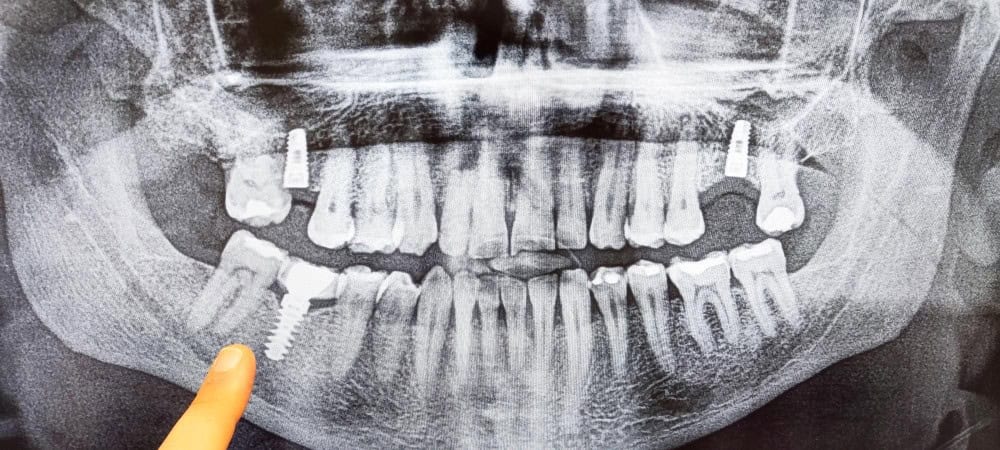
At Hygeia Dent, the choice between a single implant and a bridge is determined after evaluating the panoramic X-ray, the condition of the adjacent teeth, and the amount of available bone. The goal is to identify the most stable, functional, and long-lasting solution for each case, while explaining to the patient the advantages and limitations of each option.
For an initial assessment, you can send your panoramic X-ray in advance and receive a preliminary evaluation. If you are considering treatment abroad, you may also find our in-depth article on Dental tourism in Albania and on how to restore your teeth in Albania.

Frequently asked questions
Is an implant or a bridge better for a single missing tooth?
In most cases, when the adjacent teeth are healthy, an implant is the more conservative and longer-lasting solution, because it does not involve the other teeth and preserves the bone. However, the choice depends on the individual situation and should be determined with the dentist.
Does a bridge damage the neighboring teeth?
A bridge requires the adjacent teeth to be filed down to place the supporting crowns. For this reason, the condition of the teeth involved is carefully assessed before it is recommended.
Does an implant last longer than a bridge?
Generally, yes. With proper oral hygiene and regular check-ups, an implant tends to last longer than a traditional bridge.
Is a bone graft always needed for an implant?
No. A bone graft is only necessary when the available bone is not sufficient to ensure the stability of the implant. The assessment is made on a case-by-case basis.
How long does each solution take?
A bridge is generally completed in a shorter time, with only a few appointments. An implant takes longer because of osseointegration, which can last several weeks or months before the final crown is placed.
Is a bridge less expensive than an implant?
The initial cost of a bridge is often lower, but in the long term an implant may prove more advantageous because of its durability and because it does not involve the neighboring teeth. A personalized quote helps compare the options.